Wednesday, April 1, 2026
- 1 "Meeting to Pass on the Spirit of Hokuryu Town" held.
- 2 Introduction - Greetings from the Mayor and Superintendent of Education
- 3 Part 1: Roundtable Discussion – Speaking about the Soul of Hokuryu Town
- 3.1 ① Mr. Moriaki Tanaka: Kitaryu Town and Sports
- 3.2 ② Ryoji Okura, Honorary Citizen: Food is life (life)
- 3.3 ③ Mr. Yutaka Sano (Honorary Citizen, Former Mayor): Hokuryu Town as seen from the town hall
- 3.4 ④ Kazuo Kimura (Hokuryu Town Council Member): Repatriates who pioneered Hokuryu Town
- 3.5 ⑤ Hajime Michishita: Development of Mihagyu beef
- 3.6 ⑥ Isao Hoshiba: Hokuryu Town as seen from outside the town
- 4 Free Talk - What We Should Pass On to the Next Generation
- 5 Part 2: Social Gathering – An Evening of Conversation
- 6 The spirit of Hokuryu passed down through generations
- 7 YouTube videos
- 8 Other photos
- 9 Related articles
"Meeting to Pass on the Spirit of Hokuryu Town" held.
Hokuryu Town, Hokkaido. This small town with a population of about 1,600 people has attracted more than 270,000 people annually from 140 countries around the world. The reason behind this is not just the scenery of sunflowers, but also the unwavering spirit of the people who have lived in this land.
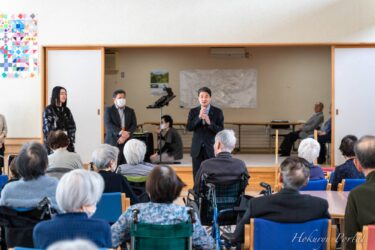
On Friday, March 27, 2026, eight people gathered in the conference room of Sunflower Park Hokuryu Onsen. The meeting was held to explore the history of Hokuryu Town and to pass on the spirit that has been cherished in Hokuryu. The content of the meeting was to be published as a special article on the Hokuryu Town Portal and shared with many people who could relate to it, including the townspeople.
Event Overview
- Date and Time:March 27, 2026 (Friday) 15:00-19:00
- place:Sunflower Park Hokuryu Onsen
- Participants:8 people
participants
- Mayor Yasuhiro Sasaki (69 years old)
- Yoshiki Tanaka, Superintendent of Education (69 years old)
- Moriaki Tanaka (89 years old)
- Ryoji Okura, Honorary Citizen (86 years old)
- Toyo Sano, Honorary Citizen and Former Mayor (age 75)
- Hajime Michishita (84 years old)
- Kazuo Kimura (83 years old), Hokuryu Town Council Member
- Isao Hoshiba (87 years old), advisor to the Early-Onset Dementia Family Association, Saisei-no-kai (Tokyo).
- Moderator: Noboru Terauchi, Hokuryu Town Portal (Co-moderator: Ikuko Terauchi, Hokuryu Town Portal)

Introduction - Greetings from the Mayor and Superintendent of Education
Mayor Yasuhiro Sasaki

"I hope that the various stories we've heard today will be preserved as educational material, and that young people will be able to watch them on video or read them in booklet form. I would like to preserve them in that way."
The mayor said he wanted this to be a gathering where young townspeople in their 50s, 40s, and 30s could remember once again the "shining treasures of Hokuryu." "Today's gathering is truly about passing on the spirit of Hokuryu Town, and since this is the first one, I am very much looking forward to seeing how this will continue, so I hope you will join us again."
Ryoji Okura selected the participants, and Noboru Terauchi handled the preparations and emceeing. Mayor Sasaki's gentle words were filled with gratitude for their connections and enthusiasm.
Yoshiki Tanaka, Superintendent of Education

"I've returned to Hokuryu Town after 50 years, and I realize that everything that truly forms the basis of my life, everything that forms the foundation, is all contained within Hokuryu Town."
If someone asked me to talk about my life, I think I would mostly talk about sports. But even with sports, the foundation is something like the aspiration I had as a child when I saw all of you here today—the kind of aspiration I wanted to become—the kind of adult I wanted to be, the kind of young person I wanted to be. I truly feel that this has always been at the root of my life."
Yoshiki Tanaka, who returned to Hokuryu as the Superintendent of Education after 50 years, spoke about his impressive athletic career, in which he played various sports including baseball, rugby, and track and field, and said that he "hardly ever lost" in the 100m race at Sorachi Track and Field. He said that the presence of his predecessors, whom he watched over throughout his time in Hokuryu, was the backdrop to this. "I truly feel that this is a town that has given me my soul," he said, and everyone in the audience nodded in agreement.

Part 1: Roundtable Discussion – Speaking about the Soul of Hokuryu Town
Six participants each gave a speech of approximately 10 minutes, followed by an hour of free discussion to deepen their understanding of each other's perspectives.
① Mr. Moriaki Tanaka: Kitaryu Town and Sports

Mr. Moriaki Tanaka became the head of the Hokuryu Town Youth Association in 1961. At that time, it is said that there were more than 200 members in the town. In an era when all farming was done by hand, all the children of farmers who did all the work by hand—plowing, planting, weeding, and harvesting—weeded the fields and joined the youth association. That was the kind of era it was.
At his first meeting in Kita-Sorachi after becoming the team leader, he said, "When I listened silently to the progress report from last year, the name Hokuryu was not mentioned even once. I came back feeling frustrated and extremely disappointed. Something has to be done." He consulted with Mr. Okura and asked the school teachers to provide guidance to strengthen the sports program. Eventually, Hokuryu began to take the lead in all sports—kendo, judo, sumo, table tennis, and track and field—and the name Hokuryu became known throughout Kita-Sorachi.
"Around the time Hokuryu became strong in sports, Mr. Okura took the lead in deciding to 'declare ourselves a sports town.' In 1967, we became the second town in Hokkaido, after Tomakomai, to declare ourselves a sports town! We then received the Hokkaido Sports Award, and I believe that spirit has continued ever since."
Mr. Tanaka then went on to tell an unforgettable story from 1948, shortly after the end of the war.
The first National Sports Festival was held in 1947, and at the second festival, Chusaku Iwai participated as a representative of Hokkaido in the cycling competition. "Everyone was inspired by that, and when they heard that Chusaku Iwai had gone last year, five or six young people, including Mr. Shono's father, were inspired to take up cycling and started practicing. Their motto was, 'If you become better than Chusaku Iwai, you can go to the National Sports Festival.'" Mr. Tanaka's uncle, Shozo Tanaka, was also among them.
Even in between farming and during the rice harvest, Shozo Tanaka practiced by running to the Horyu Bridge early in the morning, and was selected as one of the 18 representatives from Hokkaido for the 3rd National Sports Festival. However, the village mayor refused to provide assistance, saying, "This poor village doesn't have the resources for that." His senior, Sanji Tagawa, tried to talk to the mayor, but they parted ways after a falling out. The youth group then held an amateur talent show to raise money for travel expenses and sent the two young men off. The two received the money and were motivated, thinking, "They've done so much for us, we have to do our best." While most of the other players were non-professional and could practice all day, Shozo Tanaka could only practice in between farming. He won the preliminary and semi-final rounds in second place, and although he came in sixth in the final, he scored one point for the Emperor's Cup.
"The village mayor had a strong sense of responsibility to protect his poor town no matter what, and he was also a bit socially inept. I remember learning many things from him back then, even though I was still young."
The spirit of Hokuryu, a town known for its sports, was nurtured during those passionate, impoverished times when people rose up for others.
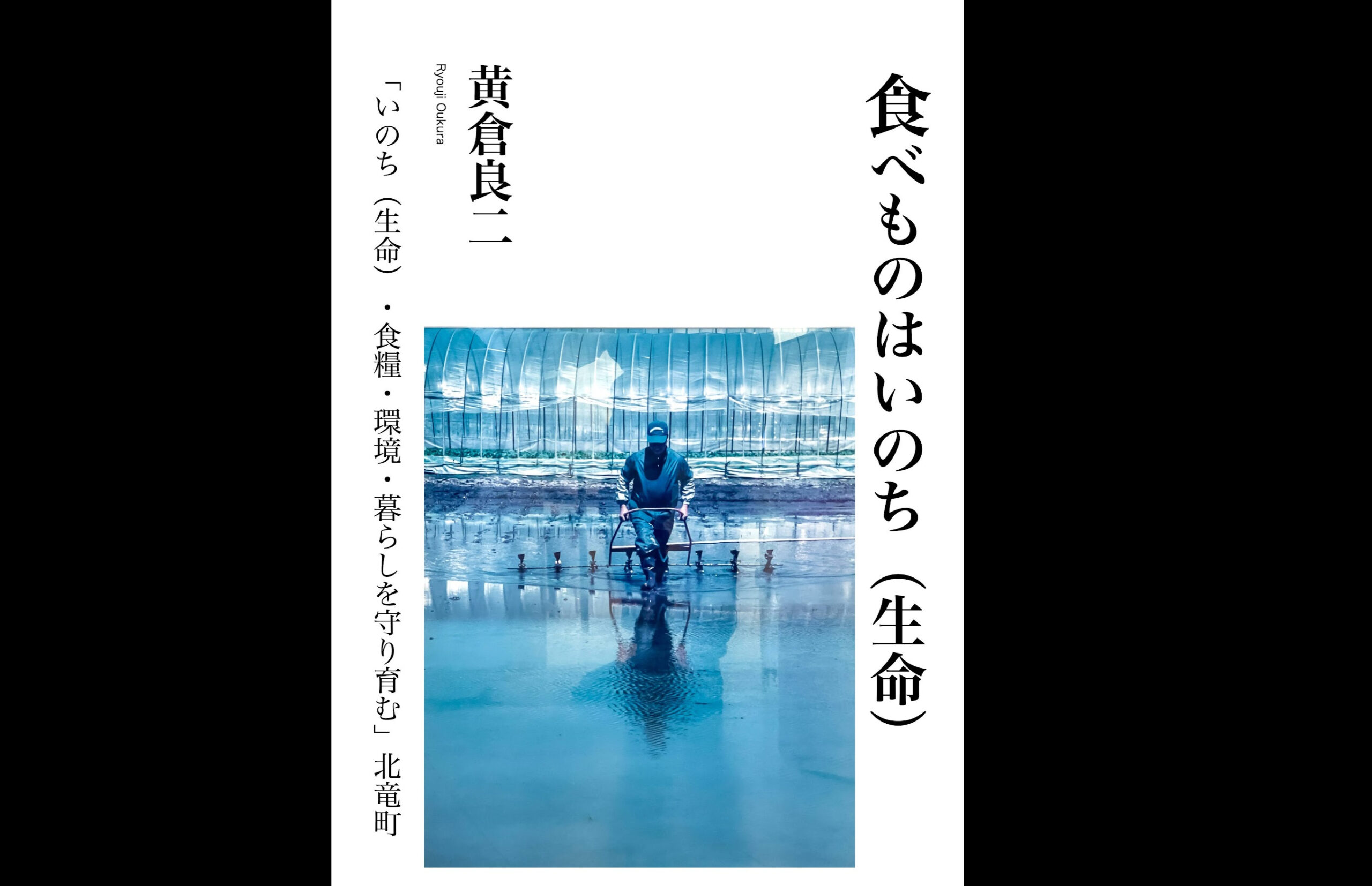
② Ryoji Okura, Honorary Citizen: Food is life (life)

In the agricultural cooperative office of Mr. Ryoji Okura, there is a hanging scroll that reads, "Heaven, Earth, Water, and the Spirit of Agriculture." These words, which express the entirety of Mr. Okura's agricultural philosophy, mean that agriculture can only be achieved when the natural world and the human spirit are united.
At the heart of that philosophy were the teachings of a great predecessor, Mitsuo Goto.
"For me, Mr. Goto Mitsuo is everything. On November 2nd, 1972, Mr. Goto entrusted me with three things: firstly, that there would soon be no food to eat; secondly, that since I hadn't gone to school, I should read books; and thirdly, that when I took on a certain responsibility, I shouldn't seek status, honor, or money. I was told this hundreds of times."
Mitsuo Goto (1898-1993) served as the chairman of the Hokuryu Agricultural Cooperative for 18 years and was a leading agricultural activist in Hokkaido who laid the foundation for rice paddy agriculture in Hokuryu with his mottoes, "Grow rice where frogs croak" and "Create rice paddies where there is water." During his tenure, he promoted the enlargement of rice paddies, the development of irrigation and drainage channels and farm roads, the introduction of large machinery, and joint use and collaborative work. In 1965, he launched the Agricultural Structure Improvement Project, completing a massive project totaling 9.8 billion yen in just over 10 years. In 1971, he was nominated as the first Honorary Citizen of Hokuryu Town.
"Before and after the board meeting, Mr. Goto would always visit me and report on what issues we were working on and what decisions we had made. Mr. Goto wouldn't say a word. However, his son, Toru, would explain what his father was thinking. 'Ryo-chan, what your father expects of you is, firstly, to raise the evaluation of rice producing regions, to eliminate the agricultural cooperative's debt, and absolutely no collusion.'"
Mr. Goto's prediction that "eventually there will be nothing left to eat" became a reality during the first oil crisis of 1972-1973. At that time, when the surplus of rice had reached nearly 7 million tons,
"It was clear that we were being asked what food is and how it should be, and my son, Kyo, told me, 'What Dad meant was that if high economic growth continues, agriculture will decline, and eventually the safety of food will be questioned,' so we decided to work together on natural farming."
"That's what Mr. Okura says.
In late August of that year, Mr. Okura, who had received instruction in natural farming from MOA in Tobetsu Town with Mr. Kyo, was asked by Mr. Kyo, "Mr. Okura, do you know what agriculture is?" as they walked along the edge of a rice field.
"I couldn't answer quickly. It's embarrassing to admit that after 20 years of working in agriculture, I hadn't really thought about what agriculture is. I still vividly remember and will never forget Mr. Akiaki Sato calmly saying, 'Mr. Okura, agriculture is about producing safe food for humans. It's a very difficult thing to do.'"
This question dramatically changed Mr. Okura's agricultural career. A test field was established for natural farming rice, without the use of chemical fertilizers, herbicides, or pesticides. The harvest, which involved the laborious process of using a weeding machine, weeding up to his knees by hand, and drying the rice on racks, yielded a disappointing result of only 5 bales per are.
On June 20, 1988, the annual "Rice Price Demand Rally" was rebranded as the "Hokuryu Town Farmers' Assembly for Producing Safe Food to Protect the Lives and Health of the People," the first of its kind in the nation. When Minoru Sato, the youth group representative, proposed a "Resolution on Safe Food Production," it was expected that there would be opposition, but instead, 80-something-year-old Kimio Sugiyama raised his hand and said, "You guys go ahead and try, I'll vote in favor." The resolution was passed with unanimous support.
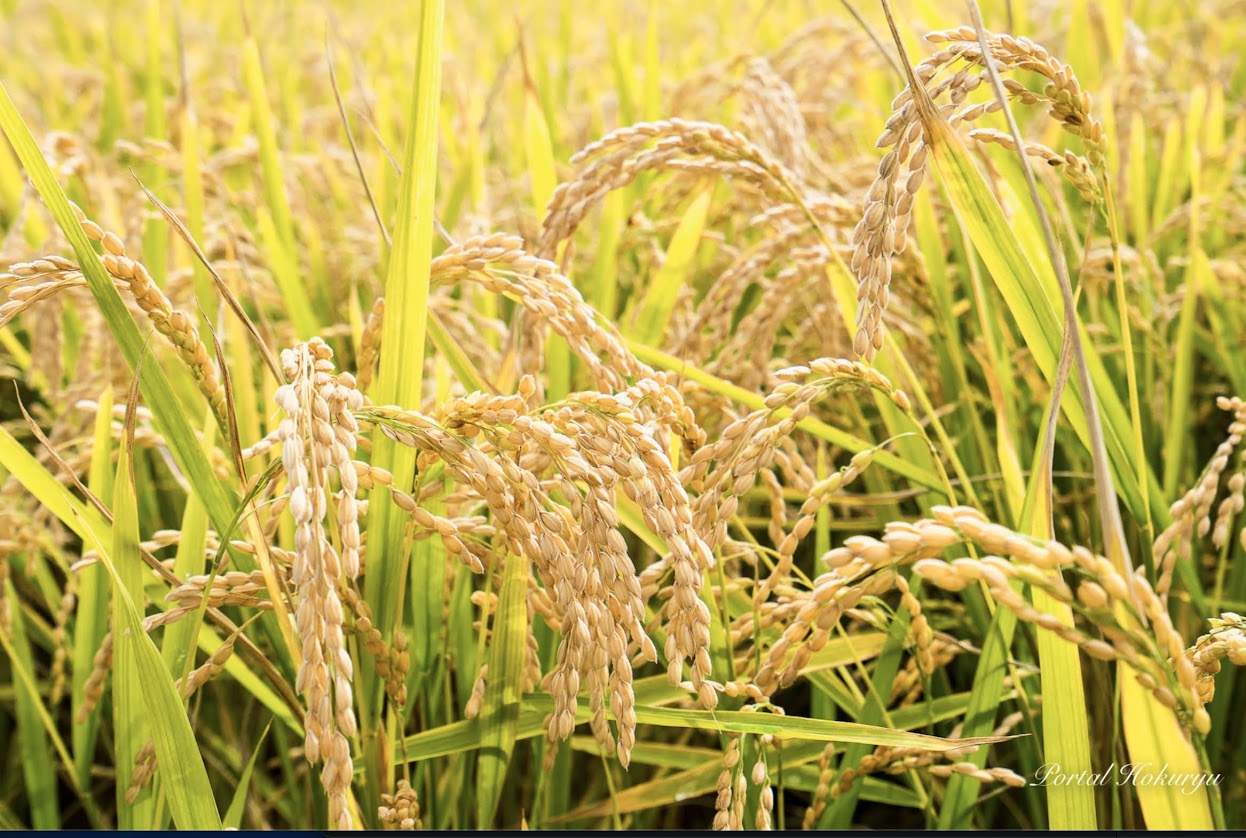
In 1989, the highly anticipated "Kirara 397" rice was produced as organic, reduced-pesticide rice, with 5,000 bales sold throughout Hokkaido under the name "Himawari Rice," becoming a popular brand.
In 1990, four organizations—the agricultural cooperative, the agricultural committee, the land improvement district, and Hokuryu Town—jointly declared themselves a "town that produces safe food to protect the lives and health of its citizens." This was a historic declaration, unique to Hokuryu in the entire country.
Then, in 2017, the Hokuryu Sunflower Rice Producers' Cooperative won the Grand Prize at the Japan Agricultural Awards. Out of 93 entries nationwide, it was one of only three recipients in the group organization category, and the only one from Hokkaido to receive the award.
"Fundamentally, agriculture is about producing safe food for humans. Agricultural cooperatives are about protecting and nurturing life, food, the environment, and livelihoods. That's all there is to it. Hokuryu has results, not just words. They can be proud wherever they go. It's amazing."
These were profound words, born from over 35 years of practical experience.
③ Mr. Yutaka Sano (Honorary Citizen, Former Mayor): Hokuryu Town as seen from the town hall

As an honorary citizen and former mayor, Mr. Toyo Sano reflected on the history of Hokuryu Town from an administrative perspective, having served for three terms over 12 years.
"I can't express how much Mr. Terauchi helped me, even during my time as deputy mayor. He summarized what I had done and wrote articles that gave me hints and inspiration, which allowed me to serve in that position for 12 years."
Beyond sunflowers and delicious rice, Hokuryu Town was also a pioneer in the field of welfare. Following the public announcement of his early-onset dementia diagnosis by the former mayor of Ichinoseki Town, a dementia family association was formed, and nearly 40 people from all over the country now visit the town every year for the sunflower marathon.
The opening of a government-run supermarket in collaboration with Co-op Sapporo also attracted attention as a rare initiative nationwide. The nursery school designed by architect Kengo Kuma, and the yellow curtain-like space with sunflowers covering the entire lobby, are also unique to Hokuryu.
"The academic abilities of the children from Hokuryu were truly outstanding. Some got into national universities on their first try without even going to cram school, and three of them got into Asahikawa Medical University. Mr. Tanaka's grandchild went to Kyoto University, and Mr. Hatsuda's grandchild went to the University of Tokyo—we even hear stories about their grandchildren. They had a sense of pride that they could be proud of when they went out into the world."
When asked about the appeal of Hokuryu Town, Mr. Sano replied:
"I believe the charm of Hokuryu Town lies in being a town that produces the safest and most delicious rice in Japan, and also in having the most beautiful sunflower fields in Japan."
④ Kazuo Kimura (Hokuryu Town Council Member): Repatriates who pioneered Hokuryu Town


Kazuo Kimura recounted the history of the development of the Ichinosawa area, sharing memories of his own family.
Mr. Kimura's father, as part of a settlement group promoted as a Japanese national policy in the former Manchukuo, brought his family to settle there in 1938.
"As a result of their stubborn efforts, they managed to build houses and develop farmland within a few years, finally establishing a stable foundation for their lives. However, in August 1945, at the end of World War II, an evacuation order was suddenly issued."
With the Soviet Union's entry into the war, they fled with only the clothes on their backs. "For several months, they endured harsh conditions, dodging enemy gunfire and desperately trying to survive." Due to food shortages, malnutrition, and illness, "my mother, brother, and sister died one after another, but my father, sister, and I managed to survive."
They landed on the mainland in Maizuru. They moved from place to place, including Hokkaido, Takikawa, and Hokuryu Ichinosawa, and finally, in the spring of 1947, they began serious pioneering work.
"We sheltered from the wind and snow in makeshift huts, managed to survive from spring to autumn by harvesting sweet potatoes, pumpkins, and buckwheat, and provided for our clothing, food, and shelter in winter by cutting down timber. We hardly ever ate rice."
Ichinosawa had abundant water sources, but it was difficult to create rice paddies due to water rights issues.
"I cultivated one or two acres of land by diving, and continued to make requests to the village, the branch office, and the prefectural government in order to acquire water rights."
I started elementary school in my fourth year in Hokkaido. In the winter of 1948, when I came to Ichinosawa, I could hardly eat rice, wheat, potatoes, or buckwheat.
"White rice was my target. I couldn't bring a white lunchbox until I was in the third grade of elementary school."
After much hardship, the rice paddies expanded. 1958 marked the 10th anniversary of the establishment of the Hokuryu Agricultural Cooperative. 1963 saw a bumper crop of rice, exceeding 150,000 bales. 1974 saw the introduction of tractors and the establishment of a farming group. 1977 achieved a rice production of 210,000 bales. Then, on January 1, 1992, Ichinosawa merged with Iwamura, taking a new step forward.
Mr. Kimura has also been involved in agricultural structural improvement projects, land consolidation, and drainage improvement projects for many years, and has participated in the national convention of the Hokkaido Agricultural Youth Conference. He left behind a legacy of participating as an invited athlete (long jump 5.05m, shot put 11.29m, 1,500m 4 minutes 25 seconds) at the Yoyogiyama National Stadium in Tokyo, where he scored only one point. It was displayed as "Hokkaido, Kazuo Kimura."
"I believe it's important to put into practice the things you've thought about. As time goes on and I grow old, I think it's important to create a self that can do things on its own," said Mr. Kimura, who has quietly built the foundation of agriculture in Hokuryu. His words carried a quiet weight.
⑤ Hajime Michishita: Development of Mihagyu beef

Mr. Michishita Hajime spoke about the development of the Mihagyu area. "It's been 100 years for us," Mr. Michishita began, laughing.
In 1897 (Meiji 30), 17 families settled in the area from Ueno Village in Kanazawa City, Ishikawa Prefecture. They traveled by boat from Maizuru to Otaru, and with the help of Kisaburo Numata, a wealthy landowner in Numata, they finally arrived in the land of Mihagyu. "This is our fifth generation. And now my grandson is the sixth generation, and the seventh generation is coming soon."
There were times when the third and fourth generations worried about finding a successor, but when he said, "Now that my son-in-law has come along, I'm living the best life. I just play around every day and go for walks to the shops," laughter erupted from the audience. Behind that laughter was a deep sense of relief and joy at being able to pass on the land inherited from his ancestors to the next generation after seven generations.
"I learned a lot about how to live, or how to have fun, and that's what I've learned in my life today." Mr. Michishita's words quietly embodied the meaning of putting down roots in the land.
⑥ Isao Hoshiba: Hokuryu Town as seen from outside the town

Isao Hoshiba, who left Hokuryu Town at the age of 18 and returned home after 60 years, has long been active as the representative of the National Association of Families of Young-Onset Dementia.
"I wasn't even sure if I was qualified to participate here," Mr. Hoshiba began humbly, but his journey was deeply intertwined with Hokuryu Town.
Mr. Hoshiba, whose wife was diagnosed with early-onset dementia in Tokyo and who has been active as the representative of a family support group, became convinced that "what is important for people with dementia is their living environment and the ability to provide care" after listening to a lecture by Christine, a dementia patient in Australia.
With that conviction in mind, they spearheaded the effort to accept the Nakamura family, a family of a young-onset dementia patient, into Hokuryu Town. Initially, there were concerns that "it will be difficult to travel from Tokyo in the cold winter," but it was made possible by a staff member's assertion that "I've been advocating this so hard, it would be ridiculous not to accept one family."
"When that family first came here, a town official volunteered to take them to the hospital in Sunagawa. When their daughter took her high school entrance exam, a town volunteer also accompanied her."
The volunteer activities in Hokuryu Town gained nationwide recognition, leading to speaking engagements from Okinawa to Aomori. It even garnered attention, with a one-hour program airing on NHK BS. And Mr. Hoshiba himself decided to move to Hokuryu Town.
When she heard that Mr. Terauchi was moving to Hokuryu, she said, "I was surprised," but after seeing him move into his renovated house, she laughed and said, "I was relieved, thinking that he would definitely continue to work for Hokuryu in the future."
"When we brought various people to Hokuryu like this, the townspeople were incredibly welcoming. Everyone came, and everyone was happy."
The warmth of Hokuryu Town, which welcomed a family it didn't even know—that was the true essence of this town.
Free Talk - What We Should Pass On to the Next Generation
After the six speeches were finished, a one-hour free talk session began with the question, "What are the things that absolutely must be passed on to future generations, or to the next generation of Hokuryu Town, and what are the things that can be changed?"
Agricultural philosophy and hopes for the next generation
Ryoji Okura repeatedly emphasized the importance of the "stories" that permeate the history of Hokuryu Town.

"In Hokuryu Town, 135 years ago, Shoichiro Yoshie, at the age of 28, chose the arduous path of clearing land surrounded by a vast primeval forest using only a saw, axe, hoe, and shovel."
After that, there were Mr. Masakiyo Kita, Mr. Mitsuo Hachiro Goto, and Mr. Sakuzo Matsuoka. Without these people, it would have been difficult for Hokuryu to be recognized nationwide as it is today."
"Fundamentally, agriculture is about producing safe food for humans. Agricultural cooperatives are about protecting and nurturing life, food, the environment, and livelihoods. I hope young people today will reflect on this at some point."
Hokuryu has declared that four organizations will produce safe food. This isn't something that's happening nationwide. Hokuryu has a track record, not just words. We can be proud of it wherever we go."
He also emphasized the importance of dialogue with members of agricultural cooperatives.
"The main players in the agricultural cooperative are the members, not the staff or the executives. It's the members. That's why we always think about the members. This also applies to the town mayor. The main players are the townspeople, not us. That's why I was fortunate to meet good people and learn from them."
"Describe the charm of Hokuryu Town in one word."
The host, Terauchi, asked, "If you had to describe the charm of Hokuryu Town in one word, what would it be?"
Moriaki Tanaka:"The people of Hokuryu Town are all kind. They're definitely different from people in other towns and villages. I think that's wonderful."
Ryoji Kikura:"Producing safe food. Protecting the environment. Not degrading or polluting trees, greenery, water, and land, and cultivating the spirit of the farmer. These are the greatest values on Earth today."
Toyo Sano:"The charm of Hokuryu Town lies in being a town that produces the safest and most delicious rice in Japan, and also in having the most beautiful sunflower fields in Japan."
Hajime Michishita:"Back when I was younger, whether we were drinking or at a meeting, I would talk to my subordinates about all sorts of things, like rice planting and farming."
Everyone was like family, young and old, talking about anything and everything and staying connected. I think the best thing about Hokuryu Town is that everyone talks to each other and cooperates."
Kazuo Kimura:"We have rice paddies, fields, forests, and the viewpoint overlooking Hokuryu Onsen, and if you go even higher up the mountain, it's a truly valuable natural observation deck. I believe our greatest strength lies in developing this terrain."
Isao Hoshiba:"When I brought everyone to Hokuryu like this, they were treated so well. Everyone came, and everyone was happy. This warmth is what makes Hokuryu so appealing."


Concluding remarks by the Superintendent of Education and the Town Mayor

Superintendent of Education Yoshiki Tanaka said the following:
"Even adults can't predict how society will change in the future."
When I considered what Hokuryu's greatest treasure was, I realized it was the ability to adapt flexibly to change and the ability to build positive relationships among children.
Rather than having children study subjects or traditions, I want to use them as a medium to teach them to understand people, to understand others' feelings, and to value themselves.
"There are no rules. We won't make any rules. There's just one thing: 'Take care of yourself, take care of others.' I want to create a town where everything can be decided based on that, and I've just taken the first step towards that goal."
Mayor Yasuhiro Sasaki said the following:

"I think young people don't get angry, they don't argue. I believe that not clashing means not moving forward. We've just started to explore how that passion manifests itself."
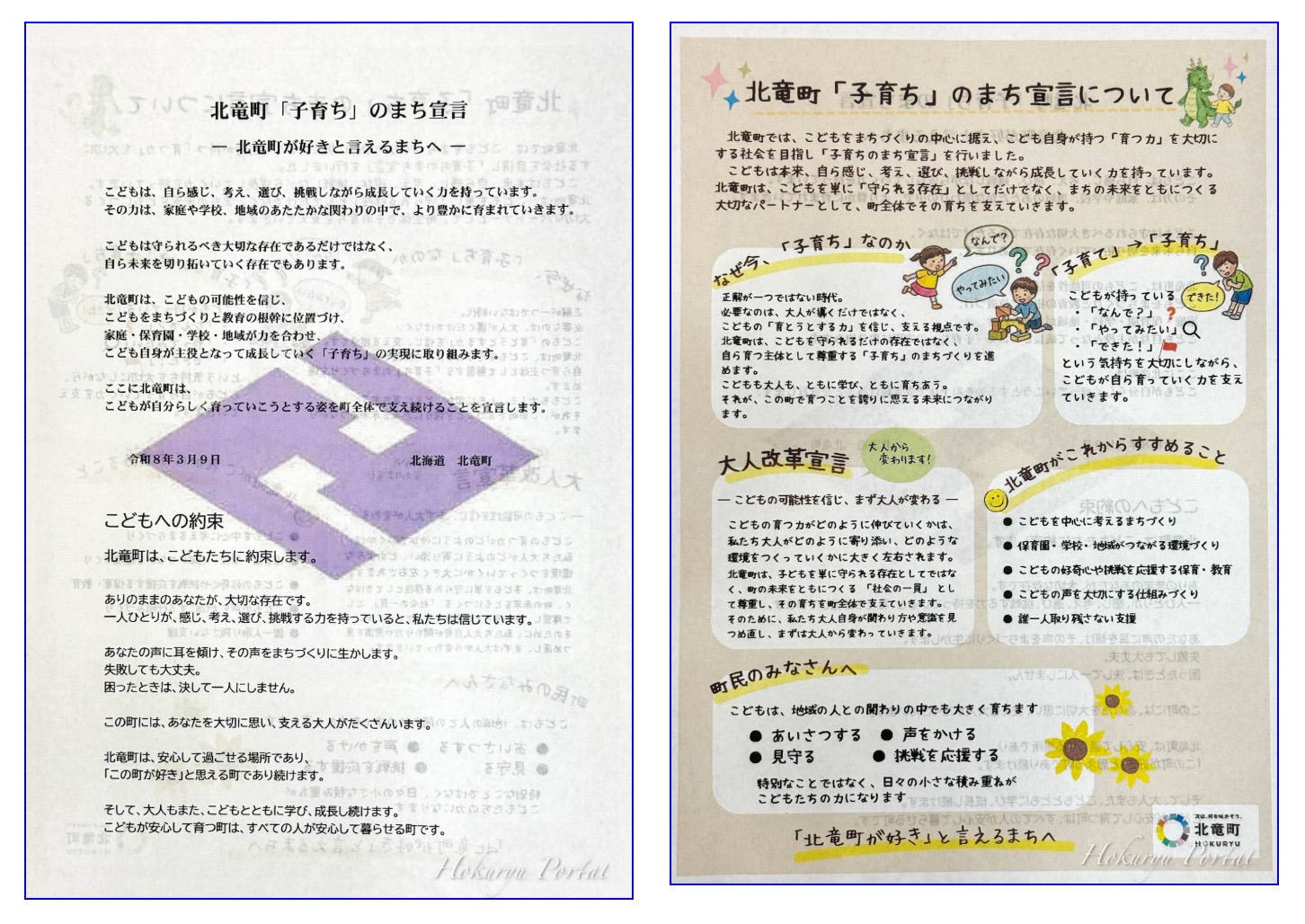
We need to create a way for babies to look at Hokuryu from the moment they are born. So I made a picture book. I want to ask questions to babies from the age of zero. I will work hard to help their souls grow bigger, become more passionate, and ignite a fire within them.
This might be the episode that sparks the first change."
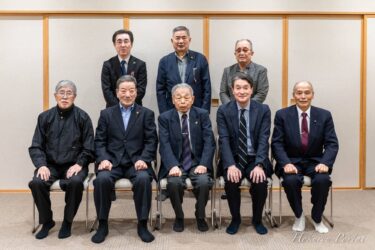
During the final commemorative photo session, laughter rang out as someone asked, "Should the old people be in the front or the back?" and words like, "Thank you for your hard work today," and "You all look so fulfilled," were exchanged as the gathering concluded in a warm and unified atmosphere.
"Two hours have flown by. I hope we can share some old stories and talk about the future over a drink. Thank you very much for today," said Terauchi.

Part 2: Social Gathering – An Evening of Conversation
The social gathering began at 17:10. The lively atmosphere of the discussion continued as everyone enjoyed the warm food from Hokuryu Onsen.


The spirit of Hokuryu passed down through generations
After the meeting ended, what remained in the hearts of the ten people gathered there was a feeling that was difficult to put into words.
What is the soul of Hokuryu Town? It is not the hardships of pioneering, nor agricultural techniques, nor sports records.
- Shoichiro Yoshiue, at the age of 28, put his hoe into a vast primeval forest.
- The story of how Mitsuo Goto, the elder, brought in water, saying, "Where frogs croak, grow rice."
- The fact that Masayuki Okura burned out his life at the age of 34, while using an abacus with both hands under four lamps.
- The repatriates fled Manchuria with only the clothes on their backs, tilled the desolate fields of Ichinosawa, and fought for water rights, driven solely by the desire to eat white rice.
- In a poor village, a youth group held an entertainment show to raise money for their members' travel expenses.
- A single statement by Mr. Miaki Sato, "Agriculture is about producing safe food for humans," changed the life of Mr. Ryoji Okura in agriculture.
- The family of a dementia patient was warmly supported by complete strangers from the town who volunteered their time.
Underlying each of those actions was a warm heart, not only for oneself, but also for others, and for the future.
The people of Hokuryu, Hokkaido, don't consider "harmony" or "compassion" to be anything special. They simply live each day carefully and with consideration for others.
But that is precisely what is so precious in this day and age. It is a warm heart like a sunflower, like the sun.
The words spoken on this day will be broadcast throughout Japan and the world through the Hokuryu Town Portal. We sincerely hope that the voices of Hokuryu, reaching 140 countries, will touch someone's heart somewhere in the world and spread a circle of empathy.
The spirit of Hokuryu Town will be passed down through generations.
With hearts as warm as the sun, we offer our boundless love, gratitude, and prayers to the great spirit of Hokuryu Town, whose stories will be passed down through generations.
YouTube videos
Other photos

Related articles


◇