Thursday, March 19, 2026
Prologue: The Promised Land
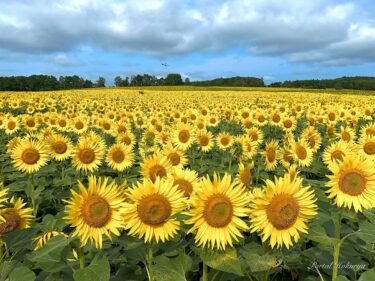
Hokuryu Town is located in a corner of the vast Sorachi Plain in Hokkaido. In summer, two million sunflowers bloom, facing the sun and painting the land golden. This magnificent scenery is not merely a tourist attraction; it is a symbol of the very spirit of this town. Like the sunflowers gazing at the sun, it is a manifestation of the unwavering will of the entire town to unite towards a single goal.
Like many rural areas in Japan, Hokuryu Town has faced the quiet challenge of an aging population. With an aging rate exceeding 421 TP3T, it would not have been surprising if anxiety about the future had cast a shadow over the town. However, this town did not choose the path of resignation. Instead, it chose to resist the fate of decline and redefine its future with its own hands. The seeds of this revolution resided in a single grain of rice planted in a vast rice paddy and in a profound philosophy about "food." This is the story of how a town's choices can become a magnificent epic.

Chapter 1: A Declaration of Life
The story begins in 1990. That year, the Hokuryu Town Hall, the Land Improvement District, and the Agricultural Committee made a solemn vow: to become a town that produces safe food that protects the lives and health of its citizens, a declaration made to the entire nation. This was not merely a slogan; it was a sacred social contract between producers, the land they cultivate, and the consumers who eat what they produce.
At the heart of this declaration lies the philosophy that permeates the town's agriculture: the phrase "Food is life," advocated by an honorary citizen of Hokuryu Town. This goes far beyond the functional meaning of "food is for sustaining life," expressing an almost religious belief that "food itself is life." According to this philosophy, food is not merely a commodity, but a sacred transfer of life force. If this is the case, then producers have an absolute obligation to maintain its purity and safety at the highest level.
This philosophy was not merely empty words. The town has refused to allow the construction of factories or golf courses in order to embody its ideals. The town's choice to protect its clean water, unpolluted land, and pure air demonstrates that its commitment to "life" is a physical reality. Even more surprising is when they began this path. The town-wide effort to reduce pesticide use began in 1988, prior to the declaration. This was years, or even decades, before terms like "food safety" and "traceability" became commonplace among consumers. They were pioneers who acted on their own convictions, not in response to market trends.
This early declaration and action was not mere idealism; it was a highly strategic formation of community identity. Regions facing population decline need a strong, shared narrative to survive. The 1990 declaration was political and social action, not just about agriculture. It created an uncompromising value system throughout the town, which became the social capital enabling later, challenging collective action. This was possible because the fundamental "why"—that food is life—had already been agreed upon by the entire community. This principle became the driving force behind innovation and perseverance.

Chapter 2: The Untrodden Path to Trust
The struggle to elevate philosophy into a verifiable system of absolute trust has been an epic journey spanning decades, fraught with unprecedented difficulties.
Reducing the use of synthetic chemical pesticides was not achieved overnight. The initiative, which began in 1988, progressed through the challenge of standardizing pesticides in 2003, and finally achieved uniformity for all households in 2004. It was a journey of unwavering determination, prioritizing long-term ideals over short-term gains.
Then, in 2006, they reached the pinnacle of transparency. As a producers' cooperative, they obtained the "Agricultural Products JAS Standard for Public Disclosure of Production Information." This was not merely a certification; it was a pledge of complete transparency, exposing all aspects of their production activities to consumers. The true value of this achievement lies in its uniqueness. It was the first time in Japan that a rice producers' cooperative with over 100 farmers had obtained this standard. To this day, only one organization in Japan maintains this standard under the same conditions. This is the heart of the heroic achievement in this story.
Behind this certification lay an enormous amount of effort. It involved meticulous data entry for each individual rice paddy and the establishment of a thorough pest and disease forecasting system with cooperative members taking turns. However, they tackled this with a spirit of "never sparing any effort for the safety and security that consumers demand." This system was not imposed from above, but was built and maintained by the farmers themselves.
The foundation of this trust lies in the lot number printed on the rice bag, the traceability system that allows consumers to accurately track "who cultivated the rice, in which field, and with what pesticides" via a website, and the state-of-the-art "bulk brown rice facility" that physically makes this possible.
Obtaining this JAS standard is not only a technical achievement, but more profoundly a social one. It required an unprecedented level of trust and cooperation among the farmers themselves, as it meant that individual farmers sacrificed some of their discretion and united for the collective power of the brand.
Agriculture is inherently an individualistic activity, and bringing together over 100 independent farms under a single standard, sharing production information, and subjecting them to a joint monitoring system involves an unprecedented number of social barriers. The fact that Hokuryu Town is the only organization to have achieved this suggests that these barriers are not technical or financial, but fundamentally social.
In short, Hokuryu Town's success is a testament to its exceptional social cohesion. This cohesion was nurtured by the shared philosophy, "Food is life," as described in Chapter 1. This philosophy fostered the trust essential for farmers to function as a unified organization, enabling them to achieve a feat no other region has been able to accomplish.
A Chronicle of Commitment: The Key Steps of Hokuryu Rice
- 1988 (Showa 63):The town has launched a town-wide initiative to reduce pesticide use.
- 1990 (Heisei 2):"A town that produces safe food to protect the lives and health of its citizens"
- 2004 (Heisei 16):Achieved complete uniformity in pesticide use across all households.
- 2006 (Heisei 18):Obtained the "Agricultural Products JAS Standard for Public Disclosure of Production Information" (the first in Japan for a rice producers' cooperative with more than 100 households).
- 2016 (Heisei 28):We have started cultivating "Kitakurin," a variety that can reduce the use of pesticide 80%.
- 2017 (Heisei 29):Received the Grand Prize (Group Organization Category) at the 46th Japan Agricultural Awards.


Chapter 3: The Will of the Trinity
Driving the Hokuryu Town model is an unparalleled cooperative system involving the producers' cooperative, Hokuryu Town, and the JA Kitasorachi Hokuryu branch. This is not merely a collaboration; it is a deeply intertwined "trinity" of organizations functioning towards a single goal. This ecosystem drives the entire story, from production and sales to engagement with the local community.
Their approach is also an attempt to reconnect the journey from the rice paddy to the dinner table through human relationships. Producers themselves travel to retailers all over Japan, from Hokkaido to as far away as Okinawa, to meet consumers face-to-face and sell their rice directly. This act of producers handing their rice to consumers is not merely sales promotion. It is a ritual to reaffirm their responsibility for the "life" they have nurtured and to hear directly from the voices of those who entrust it to them. Furthermore, the sight of the town mayor himself traveling around the country as a "top salesman" to promote "Sunflower Rice" demonstrates that this rice is not just an agricultural product, but the very identity of the town.
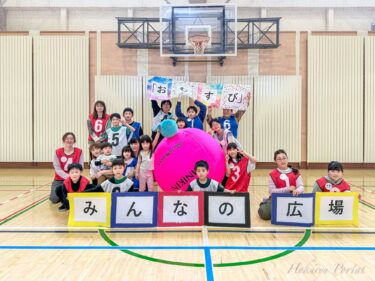
They haven't forgotten to sow the seeds for the future either. The JA Youth Division, the Chamber of Commerce Youth Division, and young town hall staff have collaborated to create the local hero, "Agri Fighter North Dragon." This unique food education activity, which teaches children the importance of food, is a symbol of the community's creativity and solidarity. At the same time, they are not neglecting to build relationships using modern methods, by strategically utilizing the town's portal site and the "hometown tax" system, with dedicated staff continuously disseminating information nationwide.
A bag of rice purchased after directly speaking with the farmer is more than just food; it's a symbol of trust, knowing the face of the producer. The loyalty to the brand that arises from such connections is deep and essential, something that can never be built through conventional advertising.


Chapter 4: The Golden Harvest
Then, the fateful day arrived. At the 46th Japan Agricultural Awards, the Hokuryu Sunflower Rice Production Cooperative won the Grand Prize, the highest award in the collective organization category. It was the moment when their 30-year struggle of conviction was recognized in the highest possible way by the nation of Japan.
The core significance of this award lies in the fact that it was bestowed upon a “collective organization.” It wasn't just the taste or quality of the rice that was celebrated; it was the very system they had built—the philosophy, unprecedented traceability, the tripartite collaborative system, and the entire community's unwavering commitment over decades—that was recognized.
This honor was the culmination of all the stories detailed in the previous chapters. It was the moment when the highest authority in Japan's agricultural world officially declared that Hokuryu's unique path is not merely a local success story, but an ideal model that illuminates the future of Japanese agriculture. For 30 years, the path the community has walked based on its inner beliefs may have been arduous and outside the mainstream. But this award provides the most authoritative external proof of the outstanding sustainability of a philosophy-driven agricultural system. Their story has been elevated from a local anecdote to a nationally recognized case study.


Epilogue: A Living Legacy
The most powerful and hopeful outcome of the "Sunflower Rice" story lies not in the rice itself, but in the future of the community it has nurtured.
Here is some astonishing data. The average age of members of the Hokuryu Sunflower Rice Producers' Cooperative is 56.5 years old. This is nearly 10 years younger than the average age of agricultural workers nationwide, which is 66.4 years old.Reference: Japan Agricultural Award Application FormThe true triumph of this story becomes clear when viewed alongside the harsh reality that the town's aging rate has reached 421 TP3T. In a town facing population decline, its core industry, agriculture, has succeeded in attracting and retaining the next generation.
Why was this possible? It's because the system they built not only produced safe rice, but also transformed agriculture into an economically stable, socially respected, and hopeful profession. Their unwavering commitment to quality and transparency created a high-value brand, bringing economic stability that enabled younger generations to make a living from agriculture.
"Himawari Rice" is more than just a food product. It's an economic and spiritual engine that drives the town's revitalization. The philosophy that "food is life" has not only produced safe and reliable rice, but has also breathed new life into the community itself.
When we pick up a single grain of rice, we are not simply looking at rice. It encapsulates a magnificent 36-year story of a promise made, a difficult path walked, and the fulfillment of that promise. It is a golden promise, kept not only for the consumers, but also for the land they love and for the very future of their town.


Other photos

Related articles

◇