Friday, September 25, 2020
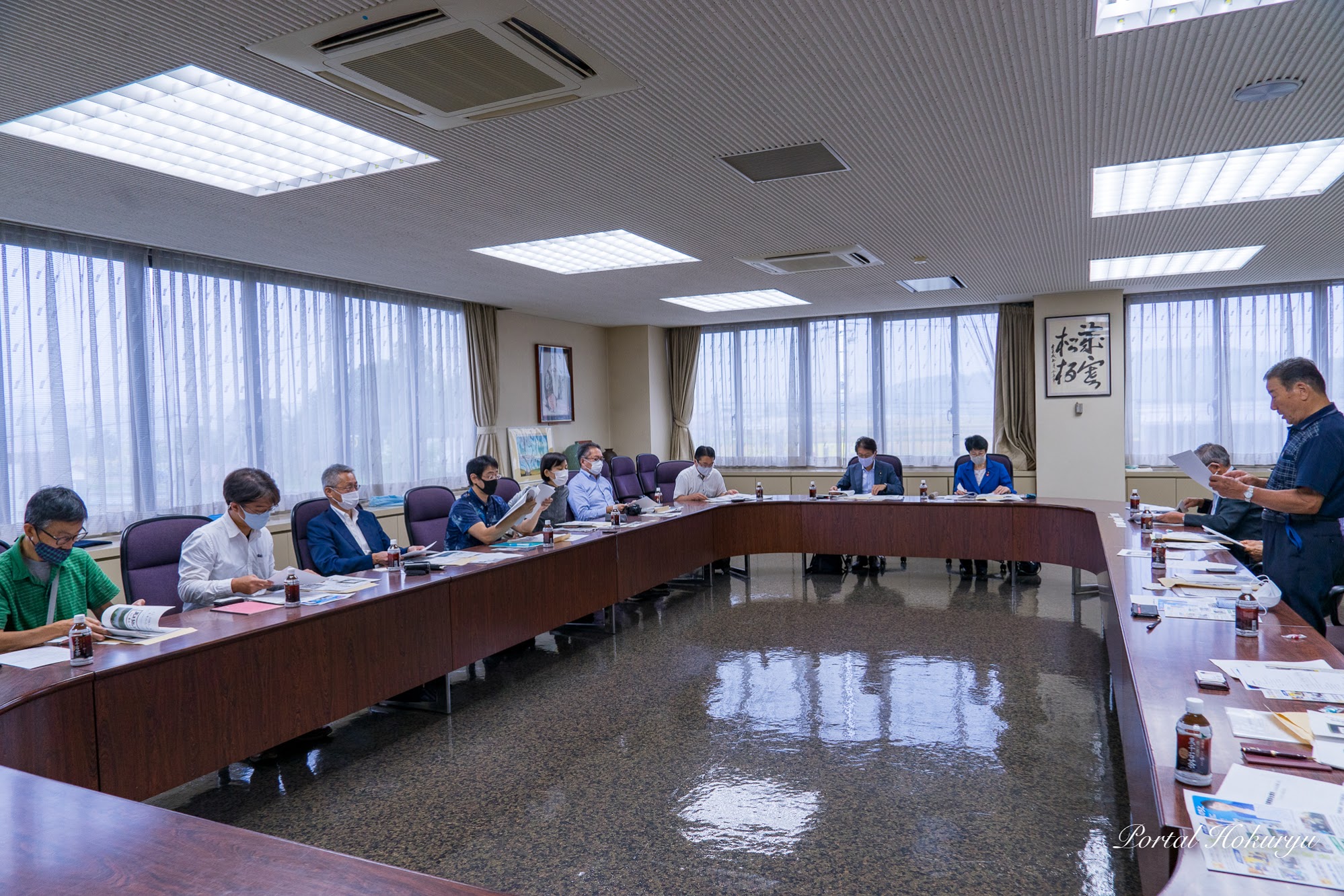
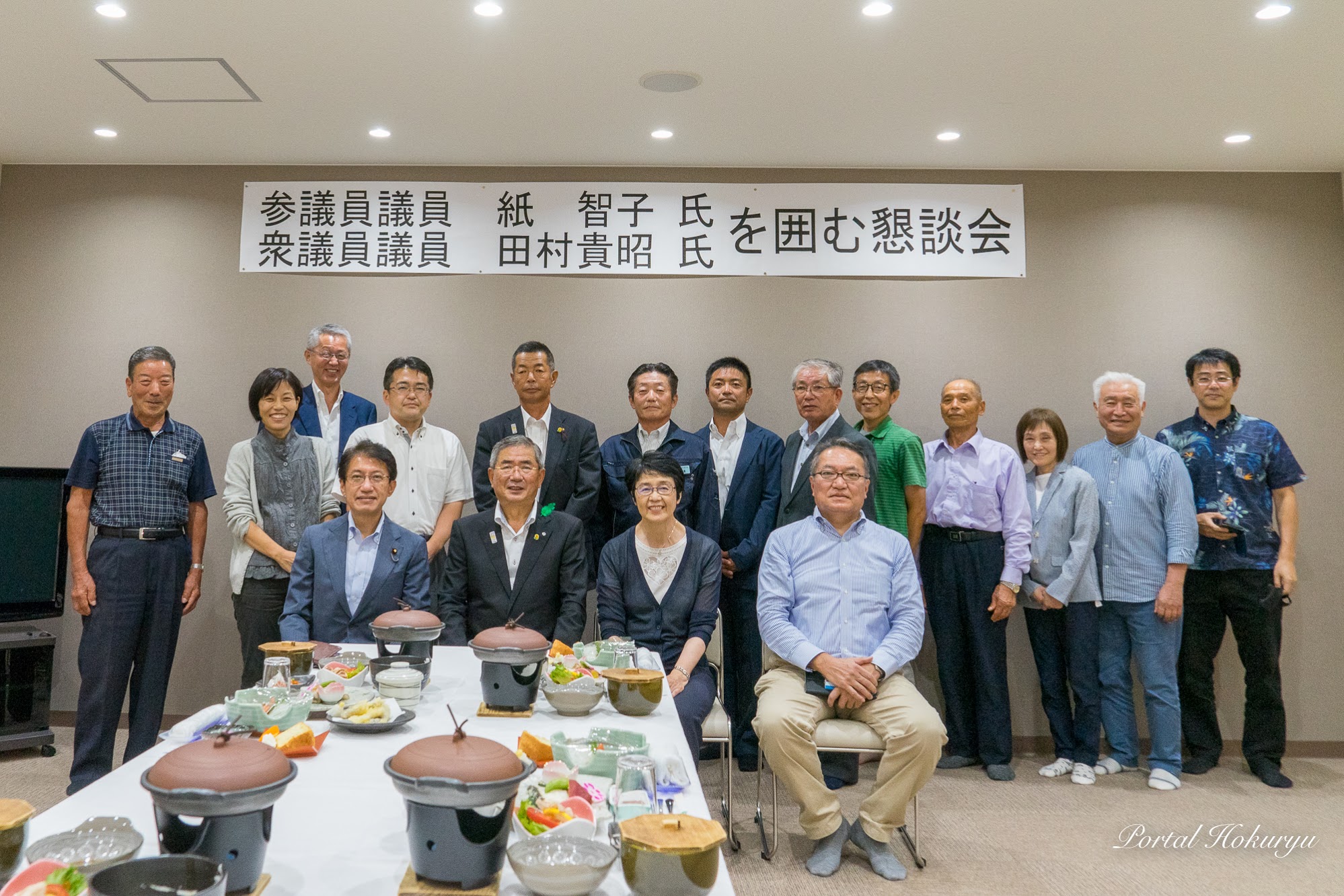
After lunch, we had a social gathering at the Honoka Agricultural Cooperative office. Members of the Honoka Agricultural Cooperative gathered and engaged in lively discussions.

- 1 Greetings from Senator Tomoko Kami
- 2 Greetings from Member of the House of Representatives, Takaaki Tamura
- 3 Diet members introduce themselves
- 4 A talk about the outline of the establishment of the Honoka Agricultural Cooperative and the production details: Director Asao Morishima
- 5 Self-introductions by members
- 6 Discussion
- 7 Honoka Shigeki Mizutani, Representative Director (Chairman of the Hokuryu Town Agricultural Committee)
- 8 Tokuji Hisada, Chairman of Hokkaido Seed Association
- 9 Young people's request: Tomoki Kaneda
- 10 paper lawmaker
- 11 Councilman Tamura
- 12 Agriculture is a vital industry! (Quoted from materials prepared by Honoka)
- 13 Other photos
Greetings from Senator Tomoko Kami

I am Tomoko Kami, a member of the House of Councillors. I have been a member of the House of Councillors since 2001 and am a member of the Agriculture, Forestry and Fisheries Committee. I visited the House of Representatives with Representative Tamura and former Representative Hatoyama.
A Cabinet decision was made on a proposed revision to the Seeds and Seedlings Act in the Diet, but due to the large number of requests for explanation of the contents, as well as the submission of opposing opinions and petition signatures, the proposal was not put on hold for further deliberation.
Many questions have arisen regarding this bill. The reason the government submitted the amendment to the Seeds and Seedlings Act was that a number of problems had arisen, such as the leakage of registered Japanese varieties such as Shine Muscat grapes and strawberries overseas, and that this was to prevent the re-import of such high-quality Japanese varieties from overseas.
The proposed revisions, aimed at preventing knowledge from leaking overseas, would prohibit farmers from self-seeding, which had previously been freely permitted, for registered varieties. This has raised questions about whether prohibiting farmers from self-seeding would infringe on their rights to produce.
Concerns about the entry of foreign companies into the market have also arisen among consumers.
So, during this visit, I would like to hear how producers in Hokkaido perceive and think about this bill.
At Honoka Agricultural Cooperative, we would like to hear your opinions on what kind of crops we grow, what efforts we are making regarding seeds, and any worries, concerns, or questions you may have about the recent legal revisions. Thank you in advance.
Greetings from Member of the House of Representatives, Takaaki Tamura

My name is Takaaki Tamura, a member of the House of Representatives representing Kyushu and Okinawa. I am originally from Kitakyushu City, Fukuoka Prefecture. The town where I live is an industrial city with a population of 180,000, and there is not a single full-time farming household.
I have been a member of the Agriculture, Forestry and Fisheries Committee for three years, and the situation surrounding agriculture, forestry and fisheries has been changing rapidly. I recognize that agriculture, food and rural areas are the most important parts of Japan.
Laws are being changed without listening to the voices of farmers. The Seed Act has banned the production of major varieties of rice, wheat, and soybeans, so there is a growing trend for each prefecture to establish its own ordinances to produce and supply stable seeds.
The same is true for fishing and forestry. At the root of this is a political trend that allows profits to go to large foreign-owned corporations. I feel a sense of crisis about this. I have been saying that the discussion on seeds should begin only after listening to the voices of farmers and producers.
I would like to visit Hokkaido and listen to the voices of those working in the fields of production who are most involved with the soil and who care most about agricultural products and seeds, and then take on the challenge of my future activities.
Diet members introduce themselves
Self-introductions were given by Mr. Kyosei Tai (Secretary to Representative Kami), Mr. Takashi Kawabe (Secretary to Representative Tamura), Ms. Kaori Yamaguchi (Secretary to Representative Tamura), former member of the House of Representatives Mr. Kazuya Hatayama (Communist Party), Secretary-General of the Hokkaido Office of the Japanese Communist Party Diet Members Group Mr. Ichiro Oda, Chairman of the Hokkaido Seed Association Mr. Tokuji Hisada (Visiting Professor at Hokkaido University), and Director of NHK Sapporo Broadcasting Station Mr. Teppei Okuno.
A talk about the outline of the establishment of the Honoka Agricultural Cooperative and the production details: Director Asao Morishima

Honoka Agricultural Cooperative was established in 2014 (Heisei 26). Preparations began two years prior to its establishment, with five farms aiming to incorporate starting rice farming together. Hoping that if they could make it through three years, they would somehow be able to make it work, everyone worked hard and endured hardships together. This year marks the sixth year, and the total annual income has exceeded 200 million yen.
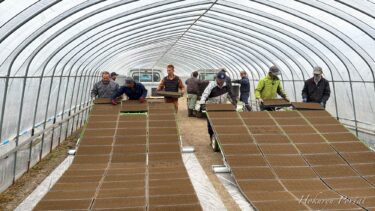
They cultivate sunflowers for sunflower oil, sunflower nuts, etc., as well as paddy rice, soybeans, autumn wheat, buckwheat, greenhouse melons (13 100m greenhouses), adzuki beans, millet, kidney beans, etc. The total cultivated area is 1,536a (equivalent to 300 Tokyo Domes).
The farm consists of nine contributing members, one new farmer, one employee, and 12 seasonal employees, including wives and former members.
Self-introductions by members
They range from young union members to elders, as well as entire families including sons, wives, fathers, mothers, etc.
Amazingly, Councillor Kami Tomoko and his wife, union member Itagaki Michiyo, were senior and junior at Hokusei University!


Discussion
▶ Paper MP:If you are a new farmer, could you tell us where you were and what you were doing before joining this organization, and why you decided to farm here?
▷ New farmer, Mr. Kaneda:I'm originally from Takikawa City and used to work in car maintenance. I heard about Hokuryu Town from a junior colleague and that's how I got connected to the town.
▶ Paper MP:How do you like it?
▷ Kaneda:It's fun!!!
▶ question:Could you tell us about the differences and your impressions between working as a family farmer and working collaboratively as a corporation?
▷ Yamada Family Mother:It's more fun working together and chatting than working alone in silence!
There are young people and other people who help out in various ways, so it's easy and doesn't put much strain on the body.
▶ question:How did your son, who took over the business, feel about it?
▷ Yamada family son:What worried me most about the future was that the land of my seniors would go uncultivated. There is a limit to the amount of work one man can do, but two men can do more than twice the work, in fact sometimes even three times the amount.
If we are to protect the land, I think it would be best for everyone to work together.
▶ Councilman Tamura:Could you tell me about the overall division of labor and work methods for farming?
▷ Director Shigeyuki Nakayama:There is no division of labor by crop, and almost everyone works on all crops. However, there are people in charge of the work. When it comes to melon cultivation, we divide the work under the guidance of Director Mizutani.

▶ question:Could you tell us what prompted you to establish the company?
Honoka Shigeki Mizutani, Representative Director (Chairman of the Hokuryu Town Agricultural Committee)

When the corporation was founded, the environment surrounding rice farming was undergoing drastic changes, with population decline and the aging of farmers. There was a sense of crisis that if things continued as they were, farmers would disappear from the town and everyone would go bankrupt.
Therefore, with a strong desire to work together as a community to protect farmland and agriculture, we implemented a trial run while observing the situation, and gradually steered the company in the direction of incorporation.
At first, we started with the whole region, but as we progressed with the discussions, people who wanted to do things their own way or whose business ideas didn't fit in with the plan started to leave one by one.
In recent years, the name of Hokuryu Town's "Honoka Agricultural Cooperative" has gradually become more well-known, and it seems that things have finally settled down.
Honoka is responsible for 40% of the cultivated area in the Mibaushi district of Hokuryu Town. The Mibaushi district has two large rice centers, which act as its core. Individual farmers also work together in the entire district to harvest rice.
The lack of a collection facility in the area may actually be a positive thing: all crops are shipped to the agricultural cooperative and stored in a cold storage facility.
A unique aspect of Honoka's management is that women are involved in the corporate management. All members are given detailed explanations of the financial statements (sales prices of agricultural products, production costs, etc.) and these are clearly displayed in tables.
The mothers understand the retail price of the items they have made and proceed with their work based on that knowledge, which has led to increased motivation for production among the members.

We all think about how to improve the efficiency of our work, constantly coming up with new ideas, and have fun working together.
It's fun, but it's also hard work, but if we all share the hardships together, we can somehow overcome them. We're all working together!


▶ question:What are your thoughts on abolishing direct payment subsidies for rice?
▷ Representative Mizutani:It's a big blow and it's tough. I was able to purchase machinery and other things with the direct payment grant. Without this grant, I wouldn't have been able to buy the machinery and I would have had no choice but to quit farming.
▶ Paper MP:We also agreed. Farmers said that this subsidy has given them a breather. We have submitted a bill to revive the system, but it has been stalled.
▷ Representative Mizutani:Since then, rice prices have risen, but there is a 10% consumption tax and fees, so although it may seem like we are making a profit, the price has remained almost the same.
Living in mountainous areas is really tough. There is a lot of snow around here, and the costs of snow removal and spreading snow-melting agents in the winter are high.
▶ question:Do you have home-seeded Honoka?
▷ Representative Mizutani:We do not collect our own seeds. All seeds are purchased. When selling seeds cultivated for food purposes, the law requires that they be standardized according to certain national standards.
In our case, we don't have any problems with self-seeding, but we are concerned that the seeds we purchase could lead to overseas companies like Monsanto entering the seed sales market, improving the varieties, and monopolizing the seeds.


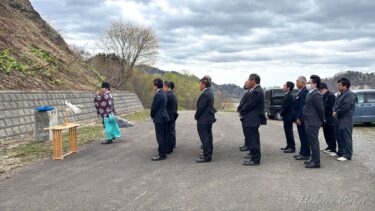
A group of lawmakers investigates the manufacturer of sunflower seeds.


Tokuji Hisada, Chairman of Hokkaido Seed Association


The group of foreign seed companies is made up of seed and pesticide companies, all of which possess genetic manipulation technology. We don't know when genetic manipulation will occur. This is our biggest concern.
Consumers want these seed companies to be domestically produced and reliable. I think the only way to find them is to find a company that sells safe seeds that can be grown in Japan.
Kyoto vegetables are native species that have been in Kyoto for a long time. They are cultivated with great care. Kyoto vegetables have strict standards, which are backed up by the Kyoto Prefectural Agricultural Experiment Station. The seeds cultivated there are distributed to farmers, who then carefully cultivate them.
In Hokkaido, rice and other major crops are well managed. Unfortunately, other crops are poorly managed. Sunflowers and vegetables are almost completely abandoned, and it is thought that foreign seeds have taken over.


Young people's request: Tomoki Kaneda
My wife also came from Sapporo and started farming, and we have one child. Even if we want to have another child, if we take a break for more than a year, we will have to pay back the loan amount in one lump sum. The requirements around this are a difficult issue.

paper lawmaker
In the case of the Young Farmers Grant, the number of people using it increased at first, but in order to prevent an increase in the budget, the system was shifted to one in which the hurdles for application were raised and reduced. As a result, problems have arisen all over the place.
Even if they start a family, have children, and want to move forward, the system is set up in a way that makes it difficult for them to continue, and the purpose of supporting people to start farming has been lost.We are now in a situation where a ladder is put up and then removed later.

Councilman Tamura
At the end of September, each ministry will submit budget requests to the Diet, so I would like to present my current proposal.

Agriculture is a vital industry! (Quoted from materials prepared by Honoka)
A message from Honoka to young people and everyone
Rice fields and farms are not food production factories.
Agriculture is not like making cars or televisions on an assembly line.
It is a vital industry in which grandparents, wives and children use their wisdom, bodies and minds to grow food, enjoying the blessings of the sun, water and soil, and sometimes battling nature.
Farmers build communities, protect the countryside, and nurture the people who live there.
Honoka was established to protect and nurture ourselves, the people around us, our natural environment, and Hokuryu through agriculture.
I am truly grateful for the wonderful message that "agriculture is an industry of life." Thank you so much!!!

"Goro Kuroita's Testament" is displayed prominently on the wall of Honoka's office.
There is nothing here but nature. Nature provides enough food for us every year.
Take from nature and live modestly and humbly.
(From the TV drama "From the North Country" - Kuroita Goro's Will)

After that, we moved to Sunflower Park Hokuryu Onsen.
Continued in the next article...
Other photos
Related articles
・Honoka Agricultural Cooperative Association Introduction Page
・A group of Diet members from Hokuryu Town (Hokkaido) held a local discussion meeting on the amendment of the Seed and Seedlings Act [No.1] Kurosengoku Business Cooperative Association
・Local meeting of Diet members in Hokuryu Town (Hokkaido) regarding the amendment of the Seed and Seedlings Act [No. 2] Honoka Agricultural Cooperative
・A meeting with Tatsuya Uehi, a member of the Diet, in Hokuryu Town (Hokkaido) regarding self-logging forestry [No. 3]
◇ Photography and editing: Noboru Terauchi Interview and text: Ikuko Terauchi