Monday, December 25, 2023
On Friday, December 22nd, from 6:30pm, a symposium to consider the future development of schools in Hokuryu Town, sponsored by the Hokuryu Town Board of Education, was held in the Hokuryu Town Community Center Large Hall.
More than 50 townspeople, including young families, participated in the event, broadening their perspectives and thinking about the future of schools in Hokuryu Town and discussing the unknown new form of schools for the future.
- 1 Symposium to consider future school development in Hokuryu Town
- 2 Lecture by Professor Motoyasu Shinbo
- 2.1 Professor Motoyasu Shinbo's profile
- 2.2 A school where everyone connects, a school created by everyone
- 2.3 Self-introduction by Mr. Yasuyasu Shinbo: Digital Promotion Committee Member of the Digital Agency
- 2.4 "Hokkaido is big": We want Hokkaido's children to know more about Hokkaido
- 2.5 Today's Story
- 2.6 A major turning point in Japanese education
- 2.6.1 Meiji "Stone board" → Showa "Blackboard" → Reiwa "Tablet"
- 2.6.2 Case study of Wakkanai City, Hokkaido (January 2023): Taking advantage of the characteristics of the equipment and utilizing it in line with development
- 2.6.3 Yonaguni Town, Okinawa Prefecture Case Study (June 2023): GIGA is the answer for multi-grade classes
- 2.6.4 Instruction tailored to developmental stages
- 2.6.5 Remote joint classes
- 2.7 Integrated elementary and junior high school education (compulsory education school)
- 2.8 School education in Hokuryu Town
- 2.9 Leading examples of compulsory education schools
- 2.10 Exchange of opinions and Q&A between participants
- 3 YouTube videos
- 4 Other photos
- 5 Related articles
Symposium to consider future school development in Hokuryu Town
This kickoff symposium featured a lecture by former school principal and current School DX Strategy Advisor to the Ministry of Education, Culture, Sports, Science and Technology, Professor Motoyasu Niho, and included examples from compulsory education schools, as well as an exchange of opinions and Q&A sessions among participants.

Organized by: Hokuryu Town Board of Education
- Organizer:Hokuryu Town Board of Education
- cooperation:Hokuryu Town Elementary and Junior High School, Hokuryu Town Yawara Nursery School, Hokuryu Town PTA Association
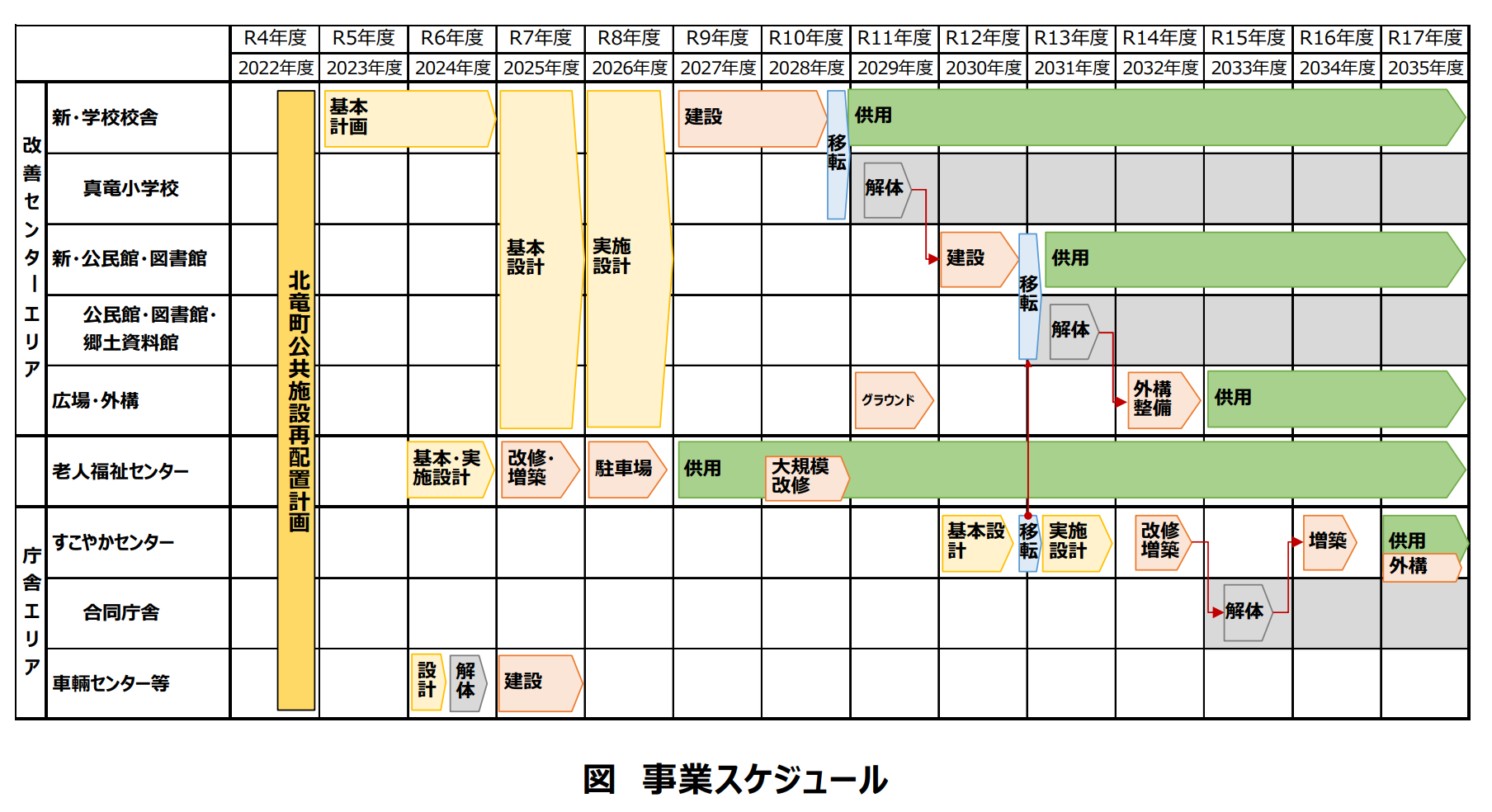
Building a school for integrated elementary and junior high education in Hokuryu Town: Opening in 2029
Hokuryu Town is planning to build a school that will provide integrated elementary and junior high education, with the aim of opening in 2029 (Reiwa 11).
In order to create a school where elementary school students through junior high school students can learn together and grow while valuing relationships with local people, we have established a residents' review committee and will continue to hold discussions with the townspeople.
reception

Catering services
At the venue, all participants received two Kurosengoku Daifuku, a type of daifuku made with sasamiya daifuku from Sapporo, and children were given sweets as gifts! In addition, there was free tea available.
Sasaya Daifuku "Kurosengoku Daifuku" presentation


Gift of sweets, tea

Tea corner

Childcare corner
There will also be a daycare center available, allowing you to leave your small children in their care and take part in the symposium in peace and relaxation.

Moderator: Junichi Iguchi, Section Chief, Hokuryu Town Board of Education

"Hokuryu Town has been considering how to develop and maintain school facilities and how to consolidate public facilities in the town center.
We are now at the stage of considering specific policies regarding what kind of school education we aim for over the two-year period from 2023 to 2024, and how we will develop facilities that combine educational and public facilities.
Based on the efforts made so far, the current challenges facing Hokuryu Town are as follows:
- Declining number of children and students
- Challenges in promoting migration and settlement
- Aging public facilities such as schools
If we reinterpret this issue as a "possibility," we believe that it will lead to an educational environment in which small classes are well-supported and there is close cooperation between elementary and junior high schools, and in urban development, it will lead to extensive support for child-rearing and the creation of a base for community development centered around the school.
We believe that this collaboration between educational environments and urban development will create an attractive town for families raising children, encourage people to move and settle in the area, and further contribute to the development of the region.
This symposium will serve as a kickoff for us to think together with the townspeople about the future of schools in Hokuryu. We look forward to hearing your thoughts and questions."
Lecture by Professor Motoyasu Shinbo

Professor Motoyasu Shinbo's profile
Born in Otaru in 1958 (Showa 33). Graduated from Hokkaido University of Education Sapporo Branch in 1982 (Showa 57).
While working at an elementary school, he has been involved for many years in the Hokkaido Social Studies Education Federation and the Hokkaido Snow Project, developing numerous local teaching materials. He has also served as a member of various committees for the Ministry of Education, Culture, Sports, Science and Technology's Information Promotion Project.
He retired as the principal of Tonden Elementary School in 2019 (the first year of the Reiwa era). He is currently active in many fields as the chairman of the Hokkaido Studies Promotion Forum, a certified NPO.
A school where everyone connects, a school created by everyone

Hokuryu Town, the town of sunflowers: The flower language of sunflowers is "admiration" and "passion"

Hokuryu Town, an agricultural town that supports everyone with its "bright farming"

Self-introduction by Mr. Yasuyasu Shinbo: Digital Promotion Committee Member of the Digital Agency
- Born in Otaru in 1958, 65 years old
- 1982: Graduated from Hokkaido University of Education Sapporo Branch
- Worked at an elementary school in Sapporo for 37 years (9 years at the Sapporo Elementary School affiliated with the school, 11 years as principal at 4 schools)

"Hokkaido is big": We want Hokkaido's children to know more about Hokkaido
The Sorachi region has an area large enough to fit three Tokyo cities, while Hokkaido as a whole is large enough to fit 35 Tokyo cities.

Today's Story
- Everyone's problems:
・Japan's economic power is declining, and children are facing problems such as school refusal and bullying.
・Due to the declining population, there is a shortage of workers and teachers, and parents and local communities are all busy (in this era of dual-income families).
- The solution: Transition to compulsory education schools (integrated elementary and junior high school education)
・Japanese education is at its third major turning point: 1872 > 1947 > 1929
・GIGA School (Workstyle reform x Quality improvement)
- A change in Japanese education occurs every 70 years (three major changes since the Meiji era)
- 1872 "Promulgation of the Educational System" → 1889 "Democratization of Education, Advancement System 6334" →
Reiwa 1 "GIGA" (computer-based learning) - The mass classes of the Showa era were aimed at cultivating average-achieving people, a necessity for the modern era.
- Individual lessons in the Reiwa era are tailored to each individual, allowing students to make the most of their individuality.
- Note-taking guidance using a real-image projector
- Lyrics written on a Chromebook (personal device)
- Multi-grade classes where students learn in the same classroom
- Third graders learn independently, second graders learn with teachers
- Example of practice: Connecting five local elementary schools and the town library online
- Improve academic ability through a continuous nine-year curriculum
- For example, the 432 system
- The gap between first year of junior high school and first year of junior high school is decreasing (hopes for a decrease in school absenteeism)
- Special needs education
- More connections and friends with children
- Being familiar with diversity from an early age
- It is easier to secure the number of teachers (work style reform)
- The principal is the only one who creates a consistent school
- Concentrated investment in one school (high-quality educational environment)
- In particular, the improvement of the ICT environment (expectations for remote joint classes)
- It is easy to collaborate with parents and the local community
- Interacting with various adults (growth)
- Increased joy for all generations
- Increased burden of commuting to school (long distances, bus commute, etc.)
- Fixed friendships
- Burden of ensuring security (problems with security as people of all ages enter)
- It takes time to integrate elementary and junior high school cultures
- Can we develop a sense of responsibility in sixth graders?
- There is no graduation ceremony for sixth graders
- The tradition of harmony (Yawara) that has been passed down through the generations in Hokuryu Town
- The spirit of the pioneering association "Bae Honsha" - "Respect through harmony" - has been passed down
◎ Japan's proudest resource is its "human resources" = Shows the importance of education
A major turning point in Japanese education

Meiji "Stone board" → Showa "Blackboard" → Reiwa "Tablet"


Case study of Wakkanai City, Hokkaido (January 2023): Taking advantage of the characteristics of the equipment and utilizing it in line with development

Yonaguni Town, Okinawa Prefecture Case Study (June 2023): GIGA is the answer for multi-grade classes

Instruction tailored to developmental stages

Remote joint classes

Integrated elementary and junior high school education (compulsory education school)
◎ One school for grades 1 to 9, with one principal and one teaching staff organization

Compulsory Education School & Complex Benefits:
Towards a lively school where everyone can gather, talk, learn and play
Disadvantages of Compulsory Education Schools & Complexes:
Think about how to turn a negative into a positive!
◎ Compulsory education schools began in 2016 (Heisei 28), and various results have been reported.
School education in Hokuryu Town
Currently, Hokuryu Town has an environment in place where everyone in the community can raise children together.
・After-school care, Wanpaku Summer Festival, Sunflower Guide for Hokuryu Junior High School students, activities with local people at Shinryu Elementary School (Soba Shokugaku Club soba-making experience, Hokuryu Taiko, Dragon Kids (volleyball), Hokuryu Kendama Club)
Naughty Summer Festival

Sunflower Guide for Hokuryu Junior High School Students

Activities with local people at Shinryu Elementary School

Hokuryu Kendama Club


The spirit of everyone working together to raise children is cultivated in Hokuryu Town.

Leading examples of compulsory education schools
Mr. Harumi Homma (Chief Engineer, General Planning Department, Docon Co., Ltd.) will give an explanation.

1. Tobetsu Gakuen (Tobetsu Town: 422 students)

❂ Features
- Foundation period (1st to 4th years), enrichment period (5th to 7th years), development period (8th and 9th years)
- The school is open and has no doors.
- Study in a quiet environment
- The first thing you see when you enter through the entrance is the library corner.
- After-school children's club on campus
- There is a positive impact from interactions between elementary and junior high schools through study sessions and training sessions for staff on lesson planning, such as the GIGA School initiative.
2. Hayakita Gakuen (Abira Town: 310 students)

❂ Features
- A new school opened in April this year
- The Board of Education, teachers, local revitalization cooperation team members, parents, and council members participated in extensive discussions.
- Elementary school (1st to 4th grade), middle/high school (5th to 9th grade)
- 45 minute lessons for 1st to 4th graders, 50 minute lessons for 5th graders and above
- The specialized course system is adopted from junior high school onwards, and elementary school teachers are also brought in.
- The library, technical room, kitchen, and main hall are open to the public.
- The library has a cafe corner, an open space where a concierge and librarian are on-site to assist customers, and is open to the townspeople.
3. Atsuta Gakuen (Ishikari City: 36 students)

❂ Features
- Base Stage (1st to 4th grade), Team Stage (5th to 7th grade), Vision Stage (8th and 9th grade)
- In addition to the Atsuta Community School, we promote community interaction by opening the library to local residents on open days and volunteering to read aloud at the library.
- In anticipation of the possibility of multi-grade classes, two blackboards and two electronic blackboards will be installed in every classroom.
- Hydraulically adjustable desks and chairs are used so that they can be used by all grades.
- There is a roadside station next door, and events are held to interact with local residents.
Exchange of opinions and Q&A between participants
Participants were divided into groups of 5-6 people and asked to freely write their impressions and opinions on cardboard panels.
question
- At Hokuryu, students spend more than a decade together starting from kindergarten, so I am worried that if we move to an integrated school, relationships will become even more fixed.
- Can sixth graders develop leadership skills at integrated schools?
thoughts
- I deeply sympathize with and feel the weight of Mr. Shimbo's words, "No matter what town you live in, it is important to help children develop academic ability." I hope that even in Hokuryu, even with a small number of children, the school will continue to provide a good school environment.


Professor Shinbo
- As new systems are constantly being introduced, it's important to keep trying out different possibilities!

- If attractive schools are built, people tend to move there.

School education undergoes major changes every 70 years!
Take on the challenge without being bound by the current system!
With boundless love, gratitude, and prayers, we hope to build a school in Hokuryu Town in the future where local people connect with each other, cooperate in the spirit of harmony, and raise bright, energetic children.

YouTube videos
Other photos

Related articles
◇ Interview and text: Ikuko Terauchi (Photography and editing assistance: Noboru Terauchi)

![Hokuryu Town "Child-raising" Lecture: "What is Child-raising?" [Yamazaki Akane, Hiroshima University Graduate School of Humanities and Social Sciences] Remote Presentation](https://portal.hokuryu.info/wp/wp-content/uploads/2025/12/2025-12-30-7.22.28-375x280.jpg)