Wednesday, July 19, 2023
On Thursday, July 13th, 2023, the "19th All Right! Nippon Awards Award Ceremony and Gathering of the 18th and 17th Award Winners" was held in the Shinagawa Front Building Conference Room. Approximately 35 award winners from across the country, as well as approximately 70 other people, including related parties, gathered.
Two groups from Hokkaido participated: the Shimokawa Town Industrial Revitalization Support Organization (Town Promotion Promotion Department), winner of the 19th All Right! Nippon Grand Prize, and Terauchi Noboru & Ikuko, winners of the Lifestyle Award at the 18th All Right! Nippon Grand Prize.

- 1 The 19th All Right! Nippon Awards Ceremony and the 18th and 17th Award Winners Gathering
- 2 Part 1
- 2.1 Opening remarks: Takeshi Yoro (Representative of All Right! Nippon Conference)
- 2.2 Guest speech: Yoshito Kageyama (Director of Urban-Rural Exchange Division, Rural Policy Department, Rural Development Bureau, Ministry of Agriculture, Forestry and Fisheries)
- 2.3 Award certificate presentation
- 2.4 Commemorative photo: 19th (12 people), 18th (12 people), 17th (11 people)
- 2.5 Keynote speech: Takeshi Yoro (Representative of All Right! Nippon Conference)
- 2.5.1 There's no place to go back to
- 2.5.2 Don't raise your children the way you were raised
- 2.5.3 Only now, only money, only myself
- 2.5.4 The Japanese people as a whole don't know what to do
- 2.5.5 The phenomenon of population decline and declining birthrates is spreading around the world
- 2.5.6 Relatively small groups living a self-sufficient life
- 2.5.7 The problem of young people not being able to live happily
- 2.5.8 Take the plunge and change your lifestyle
- 3 Break time
- 4 Part 2
- 4.1 Introduction to the award recipients' activities
- 4.2 19th All Right! Nippon Grand Prize Grand Prix and Prime Minister's Award
- 4.3 19th All Right! Nippon Grand Prize: 3 entries
- 4.3.1 Shimokawa Town Industrial Revitalization Support Organization, Town Promotion Promotion Department (Shimokawa Town, Hokkaido) Mayor Yasuji Tamura
- 4.3.2 Tono Mountain, Village and Living Network (NPO) (Tono City, Iwate Prefecture)
- 4.3.3 Higashisonogi Hitokotono Corporation (Higashisonogi Town, Nagasaki Prefecture)
- 4.4 19th All Right! Nippon Grand Prize - Jury President's Award: 3 winners
- 4.5 19th All Right! Nippon Lifestyle Award: 5 winners
- 4.6 18th All Right! Nippon Awards Lifestyle Award
- 4.7 Commentary: All right! Vice President of Nippon Kaigi, Ms. Keiko Hirano
- 4.7.1 The first gathering of three award winners
- 4.7.2 The total number of applications to date is 2,072.
- 4.7.3 Strict and fair screening without bias
- 4.7.4 The spread of understanding and dissemination across generations as seen in the Inasa Farming Team at Shizuoka University of Art and Culture
- 4.7.5 Expanding the role of women, young people, and foreigners
- 4.7.6 The award winners will make a great contribution to the world of children.
- 5 Part 3: Social gathering (award winners) with approximately 70 participants
- 6 Other photos
- 7 Related articles and sites
- 7.1 "All Right! Nippon Home Page
- 7.2 Winner of the "18th All Right! Nippon Grand Prize Lifestyle Award"
- 7.3 Discover the Treasure of Rural Areas: Kurosengoku Business Cooperative Association Selected as the 5th Excellent Case Study
- 7.4 Thank you! 46th Japan Agriculture Award Grand Prize Winner (Collective Organization)
The 19th All Right! Nippon Awards Ceremony and the 18th and 17th Award Winners Gathering
Due to the impact of COVID-19, the 17th and 18th award ceremonies could not be held, so this year, the 19th award ceremony, which will be held for the third year in a row, will be held together with a gathering of the award winners from the 17th and 18th awards.

All Right! What is the Nippon Grand Prize?
The "All Right! Nippon Award" was established in 2003 (Heisei 15) with the aim of promoting the flow of people, goods, and information between cities and rural areas, and promoting "All Right" vitality throughout Japan.
This award recognizes organizations and individuals who have engaged in activities related to the interaction between urban areas and rural areas, contributing to the expansion and revitalization of exchange, and individuals who practice a lifestyle that enjoys the lifestyles and cultures of both urban areas and rural areas.
This year marks the 19th year for the awards ceremony, which aims to promote new lifestyles in rural areas.
Awards will be given in three categories: "All Right! Nippon Grand Prize Prime Minister's Award," "All Right! Nippon Grand Prize Chairman's Award," and "All Right! Nippon Lifestyle Award."
Organizer
- Organizer:All Right! Nippon Conference (Conference to Promote Coexistence and Interaction between Cities and Rural Areas)
- Sponsor:Urban-Rural Exchange Revitalization Organization (General Incorporated Foundation)
- Sponsored by:Ministry of Agriculture, Forestry and Fisheries, Ministry of Internal Affairs and Communications, Ministry of Education, Culture, Sports, Science and Technology, Ministry of Health, Labor and Welfare, Ministry of Economy, Trade and Industry, Ministry of Land, Infrastructure, Transport and Tourism, Ministry of the Environment, National Governors' Association, National Association of Mayors, National Association of Towns and Villages, Japan Business Federation
All right! Nippon Conference
- Representative:Takeshi Yoro (Professor Emeritus, University of Tokyo)
- Vice representative:Yoshinori Yasuda (Professor Emeritus, International Research Center for Japanese Studies)
- Vice representative:Keiko Hirano (Storyteller, Professor of the Department of Broadcasting, Osaka University of Arts)
- Steering Committee Chair:Kaneko Ieharu (former Chairman of the Board of Directors of Top Tour Co., Ltd.)
Moderator: Aki Morioka (General Incorporated Foundation for Urban-Rural Exchange Revitalization)

General explanation from Mr. Yasuji Yoshioka, Secretariat
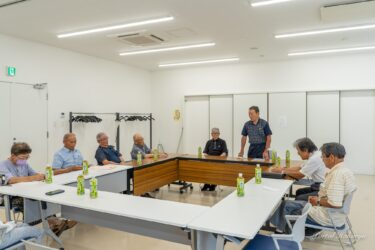
Prior to the "Gathering," Mr. Yasuji Yoshioka from the secretariat gave an explanation of the overall proceedings. The secretariat's scenario for the "Gathering" was excellent, and Mr. Yoshioka's easy-to-understand explanation made it easy to follow. Thank you very much.

To all participants
Approximately 35 award winners and their accompanying persons from all over the country participated.

Part 1
Opening remarks: Takeshi Yoro (Representative of All Right! Nippon Conference)

"Thank you very much for taking the time out of your busy schedules to attend the All-Right! Nippon award ceremony. I would like to offer my heartfelt congratulations to all the Grand Prize winners and everyone involved on your awards.
The aim of All Right! Nippon is to promote the interaction between urban and rural life, encouraging people to live in the countryside and connect with nature itself.
City dwellers can regain their senses by facing nature. Ultimately, I think this is useful for creating a decent, happy way of life. It might be a good idea to rent an abandoned house to live in, or help out with work on a farm or in the mountains.
Animals are naturally able to distinguish between different smells. As they grow, they lose this sense, but with training they can regain it. The same is true in rural areas.
Once again, I would like to offer my heartfelt congratulations and respect to all the award recipients.
I would like to conclude my opening remarks by sincerely wishing all of you gathered here today continued success and good health in the future."
Guest speech: Yoshito Kageyama (Director of Urban-Rural Exchange Division, Rural Policy Department, Rural Development Bureau, Ministry of Agriculture, Forestry and Fisheries)

"There is a theory that the current situation in rural areas is one of aging and declining population, causing them to lose vitality.
Creating prosperous and vibrant rural areas and farming, mountain and fishing villages with wisdom, ingenuity and hope
When asked whether exchanges with cities are necessary to support impoverished farming, mountain, and fishing villages, I would say that is by no means the case. I wonder whether it is really correct to say that farming, mountain, and fishing villages are impoverished.
If we look at each of these rural areas, we find many examples of how people are using their wisdom, ingenuity, and hope to create prosperous and vibrant rural areas. I believe that all of you here today are representatives of such rural areas.
I'm sure that you have all gone through many hardships, experienced setbacks, and overcome obstacles, but at the same time, I'm sure that you have also experienced much joy, a sense of accomplishment, and mutual understanding.
I believe the main purpose of this awards ceremony is to examine the efforts you have made, share your struggles and joys, and share this with other regions, while also giving you the hope and strength to forge new paths for yourself.
Urban, rural, and fishing villages supporting each other with a spirit of mutual support
Such rural areas can support cities. They can support each other with a spirit of mutual support and make up for each other's shortcomings. I believe this is the meaning of "urban rural areas."
The Urban-Rural Exchange Division, where I work, is learning from wonderful local initiatives and seeking and implementing support tools and subsidy programs that can be used anywhere, even in rural areas that are in difficult environments across the country.
I am currently accepting applications for the project I am in charge of, "Farm Stays, Agriculture-Welfare Collaboration, and Action Plan Creation." I have met some of the participants before.
Apply for Discover the Treasures of Rural Areas
We are currently running a selection project called "Discover the Treasures of Rural Areas," and we are accepting applications until the end of August, even from those who have been selected through "All Right! Nippon." We would be grateful if you would consider applying.
We wholeheartedly support the efforts of all of you and all of the rural areas across the country. I would like to clearly state that it is our job to revitalize the entire country, from rural areas, which are the frontiers of our time, to cities, and conclude my remarks on behalf of the Urban-Rural Exchange Division of the Ministry of Agriculture, Forestry and Fisheries. Once again, congratulations to all of you.
Award certificate presentation
All Right! Nippon Grand Prize Grand Prix and Prime Minister's Award: Greenwood Nature Experience Education Center (NPO Taifu Village, Nagano Prefecture)

Greenwood Nature Experience Education Center (Non-Profit Organization) (Taifu Village, Nagano Prefecture)
The winners of the 19th All Right! Nippon Award

Commemorative photo: 19th (12 people), 18th (12 people), 17th (11 people)


Keynote speech: Takeshi Yoro (Representative of All Right! Nippon Conference)
Born in Kamakura, Kanagawa Prefecture in 1937 (Showa 12). Professor Emeritus at the University of Tokyo, he won the Mainichi Publishing Culture Award in 2003 (Heisei 15) for his book "The Wall of Idiots," which has sold 4.5 million copies. His latest book, "What It Means to Understand Things," was published in February of this year, and he has written many books.
He likens the relationship between cities and rural areas to the relationship between a person's mind and body, and calls for exchanges between the two to bring Japan to a "healthy state of mind and body."

"It was more than 20 years ago that I first became interested in the exchange between cities and rural areas.
There's no place to go back to
I came across an article in the newspaper about city dwellers who have nowhere to return to even during Obon, and it really caught my attention.
When I was young, many people who came to the city would say, 'If things don't work out, I'll go back to the countryside and become a farmer.' There was a place to go back to, but that gradually disappeared, and living in the city became the norm.
Don't raise your children the way you were raised
Another thing that bothered me was the issue of children. Raising children in the city is not normal.
Since the Meiji era, the Japanese have followed a policy of not raising their children the way they were raised. This is difficult for parents to do, and it means making their children do things they have no experience of.
Is that really okay? The person I felt this most strongly about was Konosuke Matsushita.
When I read an article in the newspaper about creating scholarships for students in financial difficulty, I said, "Why would they do that?"
Konosuke Matsushita only graduated from elementary school and struggled to make a living, but he became successful. He created a world where young people are told, "Don't live the way I lived."
Whether that was good or bad is not something I can judge.
Only now, only money, only myself
One memorable moment was 30 years ago, when I was giving a lecture on the evolution of medicine, and a student who was listening asked me, "What's the point of studying evolution, something that has already happened?" I was at a loss for words. At that moment, I felt that times had changed.
We live in an age where people say, "Only now, only money, only me." History has disappeared and we are rapidly entering an age of "only now."
Ten years later, "All Right! Nippon" began to take shape.
The Japanese people as a whole don't know what to do
Current trends include "young people are not energetic" and "suicide is the leading cause of death." Because we do not believe that we live in a healthy society, we have become a society where young people are committing suicide.
The reason this is happening is due to problems with the way we live, including economic issues. Our daily lives are changing every day.
This is because children are no longer able to live the way their parents did, and so Japanese people as a whole are in a state of not knowing what to do, and are in a state of vagueness, and I believe this has continued.
The phenomenon of population decline and declining birthrates is spreading around the world
At my age, I'm interested in a book called Silent Earth: The Silent Spring of Insects by Dave Goulson (a modern-day warning from Rachel Carson).
It questions the harmful effects of DDT (an organochlorine insecticide and pesticide) and is said to be a warning against the "silent spring in which the buzzing of insects cannot be heard."
The book points out that "over the 30 years from around 1990 to around 2020, the number of insects worldwide has declined by approximately 76%." This is what concerns me the most.
Although humans and insects are different, when we look at population trends, we can see that the phenomenon of population decline and declining birth rates is spreading throughout the world.
There is one place I visited last year and this year in a row: Sado Island in Niigata Prefecture. Farmers on Sado Island practice organic farming to protect the Japanese crested ibis. In Yamanashi Prefecture, which I visited the day before yesterday, insects can no longer be found unless you go deep into the mountains.
Relatively small groups living a self-sufficient life
I think that today's society has created a difficult place for young people to live in. I'm no longer as energetic as I was when I was younger, so I have no intention of getting involved in social movements, but it's not easy to change a society that has become so established.
This is a prayer to God. It is not something humans do, it is a natural disaster. The next predicted Nankai Trough earthquake is in 2038.
If an earthquake were to occur directly beneath the capital area, and various problems arose as to how long Tokyo would be able to withstand, everyone would have to make bold changes to the way they live their lives.
Children in particular have to adapt to a time when the world is changing drastically. I was in the first grade of elementary school when the war ended. It was a time when the world was changing dramatically.
In the future, the biggest change in society will be "values." I think these will no longer be urban-type, but will become rural-type.
Research into future predictions using computers predicts that society will become one in which many small settlements consisting of small numbers of people will emerge.
First, logistics were disrupted, food prices soared, and the value of currency fell. After the arrival of the Black Ships, the Ansei Tokai Earthquake (1854) occurred. Natural disasters such as earthquakes brought about changes in the shogunate and politics.
Various natural disasters are occurring in Japan today, which has many people thinking about how to live. They are thinking about where the things they need every day come from and how to get them. In such a situation, small groups can secure food and other supplies, but in large cities, they are left completely helpless.
The world changes every time a natural disaster strikes. What remains constant is daily life and routine. Societies where securing daily needs is the basis are relatively small groups and self-sufficient lifestyles. Relying entirely on others for the things you absolutely need to survive is a very dangerous way of life. This has now become the norm.
The problem of young people not being able to live happily
The reason why the population is concentrated in cities is because young people are attracted to them. In the past, I thought of cities as being full of people. When you push your way through the crowds, you find that there is nothing in the middle.
Gathering people together attracts people. Modern society has managed to operate this efficiently and economically. However, problems have arisen when we try to do this for the entire planet.
We have created and operated systems based on our own ideas: if we do this, then this will happen, and if we do that, then that will happen. In some ways, the creation of these huge systems has been a good thing, but it has also created problems that prevent young people from living happy lives.
Take the plunge and change your lifestyle
We talk about a declining birthrate and an aging population, but declining birthrate and aging are completely separate issues.
There is nothing to worry about regarding the aging population. If you wait 30 years, they will all be gone. It is said that marginal villages are aging, but currently there are more elderly people in cities.
I think we should use the earthquake as an opportunity to think about how the world will change.
Timing is important. If you do it too early, an earthquake may destroy everything. When the timing is right, think about where and how you will live. This includes procuring food, water, and energy.
Your challenge from now on is to make bold changes to the way you live your life.
Wouldn't it be better to take a day off from your smartphone and give yourself some time to think?
The only thing I'm looking forward to now is whether I'll be able to celebrate my 101st birthday in 2038. I hope that society will become one in which insects increase in number."

Break time
Commemorative photo time with Takeshi Yoro
As the proceedings went more smoothly than expected, a photo session with Takeshi Yoro was quickly arranged. The award recipients were delighted to pose for photos together.

Part 2
Introduction to the award recipients' activities
With slides prepared by the secretariat in the background, the winners of the 19th, 18th, and 17th awards each gave a two-minute speech.
Order of announcement of award winners
1. Greenwood Nature Experience and Education Center
2. Shimokawa Town Industrial Revitalization Support Organization (Town Promotion Department)
3. Tono Mountain, Village and Living Network
4. Higashisonogi Hitokotono Corporation
5. Asuka's Future Creation Association
6. Aridagawa Town x Ryukoku University
7. Nagasaki Southern Production Association
8. Masahiro Sezaki
9. Mitsunori Ushida
10. Yumi Sanpei
11. Shohei Kunida
12. Yuka Yamanaka
==== 18th Award Winner ====
13. Takeda Cultural Co-Prosperity Association
14. Natural History Data Bank Anima.net
15. Saori Aoyama
16. Hyoyoshiya
18. Small Village Research Institute
19. Peace & Nature
20. Loconnect LLC
21. Noboru and Ikuko Terauchi
22. Fujimi Kadowaki
23. Masaru Takasaka
24. Hiroyuki Mizuno
==== 17th Award Winners ====
25. Sora no Sato
26. Oku-Yahagi Immigration and Settlement Promotion Council (absent)
27. Aba Village Management Council (absent)
28. Shushu (Absent)
29. Social Farm Sanjo
30. Shizuoka University of Art and Culture Inasa Farming Team
31. Hinataya Co., Ltd.
32. Kazue Shido
33. Sachiko Shiotsuki
34. Mari Okayama
35. Shinzo Wada
19th All Right! Nippon Grand Prize Grand Prix and Prime Minister's Award
Greenwood Nature Experience Education Center (NPO) (Taifu Village, Nagano Prefecture)

19th All Right! Nippon Grand Prize: 3 entries
Shimokawa Town Industrial Revitalization Support Organization, Town Promotion Promotion Department (Shimokawa Town, Hokkaido) Mayor Yasuji Tamura

Tono Mountain, Village and Living Network (NPO) (Tono City, Iwate Prefecture)

Higashisonogi Hitokotono Corporation (Higashisonogi Town, Nagasaki Prefecture)

19th All Right! Nippon Grand Prize - Jury President's Award: 3 winners
Asuka Future Creation Association (Asuka Village, Nara Prefecture)

Aridagawa Town × Ryukoku University (Aridagawa Town, Wakayama Prefecture)

Nagasaki Southern Production Association (Minamishimabara City, Nagasaki Prefecture)

19th All Right! Nippon Lifestyle Award: 5 winners
Masahiro Sezaki (Edogawa Ward, Tokyo)

Mitsunori Ushida (Joetsu City, Niigata Prefecture)

Hiromi Sanbe (Unnan City, Shimane Prefecture)

Shohei Kunita (Hiroshima City, Hiroshima Prefecture)

Yuka Yamanaka (Saijo City, Ehime Prefecture)

18th All Right! Nippon Awards Lifestyle Award
The award winners will give two-minute speeches, which will introduce the activities of Terauchi Noboru and Ikuko from Hokuryu Town.
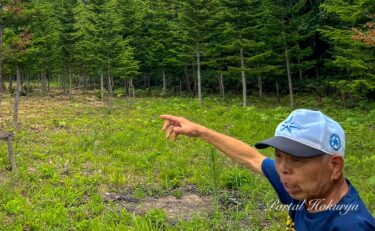
Noboru Terauchi and Ikuko (Hokuryu Town, Hokkaido)

(Photo provided by All Right! Nippon Kaigi)

"We are Noboru and Ikuko Terauchi, from Hokuryu Town, Hokkaido, and have been dedicated to disseminating information for 13 years.
I would like to offer my heartfelt congratulations on holding this gathering of award winners today. I would also like to express my gratitude for inviting me. Thank you very much.
Hokuryu Town is located west of Asahikawa City and east of Rumoi City on the Sea of Japan coast. With a population of about 1,650 and an aging rate of 45%, it is a town that shows the future of Japan.
As an agricultural town, the town's specialties include "Sunflower Rice," "Sunflower Melon," and "Sunflower Watermelon," which won the Japan Agriculture Award Grand Prize in 2016, as well as Kurosengoku Soybeans (small-grain black soybeans) from the Kurosengoku Business Cooperative, which was selected as an outstanding example in the 5th Discover Rural Treasures Awards in 2018.
Sunflowers are a famous tourist attraction. The 2 million sunflowers blooming across 23 hectares on the east-facing slopes are a spectacular sight. The Hokuryu Sunflower Festival, held for about a month in the summer, attracts around 300,000 tourists from all over the world.
We moved to Hokuryu Town from Tokyo 13 years ago. We built our website by ourselves. My wife writes the text, and I take photos and manage the website. We also maintain a website, Facebook page, Instagram, and YouTube channel. On busy days, we upload around 200 articles in a month, and we've been sharing information about the town for 13 years.
The program shines a spotlight on the residents of Hokuryu Town, revealing what kind of people they are, what their thoughts are when they grow crops, and how they enjoy life.
And with the desire to empathize with and share the joy and excitement of the townspeople with as many people as possible, we ourselves honestly express and communicate our joy, empathy, and emotions.
Hokuryu Town is a wonderful town. I hope you will visit it at least once. Thank you very much for coming today."
Commentary: All right! Vice President of Nippon Kaigi, Ms. Keiko Hirano
Born in Numazu City, Shizuoka Prefecture in 1960 (Showa 35) (age 62), graduated from Tokyo Metropolitan Kunitachi High School and Waseda University, freelance announcer (former NHK newscaster), storyteller, former chairman of the Disaster Prevention Certification Association, professor at the Broadcasting Department of Osaka University of Arts, part-time lecturer at Musashino University (traditional culture research), member of the Child Welfare and Culture Subcommittee of the Council for Children and Families.

"Congratulations to all the award recipients.
The first gathering of three award winners
Due to the impact of COVID-19, the awards ceremony was canceled twice (the 17th and 18th). This was unthinkable for us, who have been holding the awards ceremony for about 20 years.
I was looking forward to meeting and talking with all the award recipients. By moving from the document screening process to face-to-face meetings and conversations, I learned new things. These can lead to future connections, and no matter how wonderful the award ceremony, it is always an exciting one.
This was the first time that the award recipients from the 19th, 18th, and 17th awards have all gathered together at an awards ceremony for All-Right! Nippon.
Meeting you all today, I was impressed by your energetic activities and passionate speeches. During the judging process, all the activities were wonderful, and the act of choosing from them reminded us of the difficult times we had. We could feel the energy and splendor that emanated from the documents in all of the activities.
The total number of applications to date is 2,072.
To date, there have been 2,072 applications (1,792 for the All-Right Nippon Grand Prize and 280 for the Lifestyle Grand Prize). Of these, a total of 313 have been awarded prizes (236 for the All-Right Nippon Grand Prize and 77 for the Lifestyle Grand Prize).
I think you will be able to see just how exceptionally selected all of the participants were. I have been a judge since All Right! Nippon began in 2003, and I have looked at not only the award-winning initiatives, but also the outlines of all the submitted initiatives. Looking at the number once again, I think it is amazing.
As of April 2005, there were 2,395 municipalities nationwide. This number is comparable to the 2,072 applications received to date. Although there are some overlaps, when divided by the number of municipalities nationwide, the number of applications accounts for 85% of the total. This shows that there are many colleagues engaged in many activities all across the country. The probability of receiving the award's encouragement is only 15%.
We hope that these awards will continue to foster many more horizontal connections between particularly outstanding people in the future.
Strict and fair screening without bias
The judging committee conducts rigorous and fair judging, with no prejudice whatsoever, and with much heated discussion.
As a condition for the examination,
- Number of years of service(If the activity ends for some reason, there is a possibility that the project will no longer be supported.)
- Emphasis on versatility as a model(Can it be used in other regions? Does it have a social impact?)
- The importance of effectiveness(Economic effects, human effects, expected effects)
- The willingness to try again and again even if you failEmphasis on
You can apply to All Right! Nippon multiple times. In fact, some people have tried five or six times. The judges are happy and grateful to see such a positive attitude, not overlooking even the smallest improvements made through hard work.
More than just being selected, it's the sight of their continued efforts that is so beautiful and reassuring. Continuing into the future is what makes this an "All Right!" Nippon activity, something to be proud of.
The judges do not simply assign scores and rank the winners. They discuss the winners from their own perspectives, and share and evaluate the value of each activity based on their experience, knowledge, and insight.
When selected activities are highly praised, it can inspire others who are doing similar activities.
When a new initiative produces results after much hard work, we sometimes want to recognize the hard work that went into it.
The spread of understanding and dissemination across generations as seen in the Inasa Farming Team at Shizuoka University of Art and Culture
I focused on the Inasa Farming Team from Shizuoka University of Art and Culture. They were active for four years at university, and in their presentation just now, they said that they didn't really understand the situation because the members had changed since the award was given three years ago.
For a moment I wondered if my fear had happened, but then I heard that the number of participants had increased and the event was growing, and I thought to myself, "That's amazing, that's wonderful!"
Now that the students who were first-year university students at the time are in their fourth year and all grades have had the opportunity to experience this project, I think it's all good! Supporting this project in Japan will be very meaningful in terms of spreading understanding and dissemination of agriculture across generations and imagining the future of agriculture. I hope that this will lead to a bright future.
We have also received applications from young people from the SDGs and Generation Z who are taking on various challenges, so we are very much looking forward to what the future holds.
Expanding the role of women, young people, and foreigners
I also feel that women are becoming more active overall. Seeing women taking an active role and giving speeches with ease made me feel that the times are changing. I believe that the activities of all women will be a factor in revitalizing the town.
The opportunities for success in rural areas are expanding to include women, young people, and foreigners. Foreigners and experienced business people alike have opportunities and are warmly welcomed as colleagues.
The award winners will make a great contribution to the world of children.
I am currently working with Professor Yoro, and perhaps influenced by his way of thinking, I have become interested in insects.
With the COVID-19 pandemic making it difficult to meet in person, Professor Yoro has been streaming his lectures online. Each of his talks is truly moving and wonderful.
I realized that your efforts are like a living thing. I believe that you will demonstrate your ability to raise children in the future and help them grow in a positive direction.
I believe that you all have the power to make a great contribution not only to agriculture, but also to the world of children, not just to the general idea of the human heart. I hope that with your continued support, we can continue to enrich the content of All Right! Nippon's activities.
Please continue to actively participate in these activities, and on behalf of the judging committee, I would like to congratulate and thank you all.
I hope that you will continue to work hard to promote even more active exchanges between cities and rural areas. This concludes my comments.
Thank you very much for coming all the way here to be here today as award recipients."

Part 3: Social gathering (award winners) with approximately 70 participants
Move to the venue for the social gathering: The venue is "Sandaime Torimero"


With boundless love, gratitude, and prayers, we send our heartfelt thanks to the "All Right! Nippon" Grand Prize, which will revitalize cities and rural areas and invigorate Japan.

Other photos

Related articles and sites
"All Right! Nippon Home Page
・https://www.kouryu.or.jp/information/19thohraiawards.html
・https://www.kouryu.or.jp/service/ohrai.html
Winner of the "18th All Right! Nippon Grand Prize Lifestyle Award"
Discover the Treasure of Rural Areas: Kurosengoku Business Cooperative Association Selected as the 5th Excellent Case Study
Thank you! 46th Japan Agriculture Award Grand Prize Winner (Collective Organization)
◇ Interview and text: Ikuko Terauchi (Photography and editing assistance: Noboru Terauchi)