Monday, December 23, 2024
On Wednesday, December 18th, from 1:30pm to 3:00pm, a "Healthy Lecture" to prevent lifestyle-related diseases was held at the Hokuryu Town Health Center.
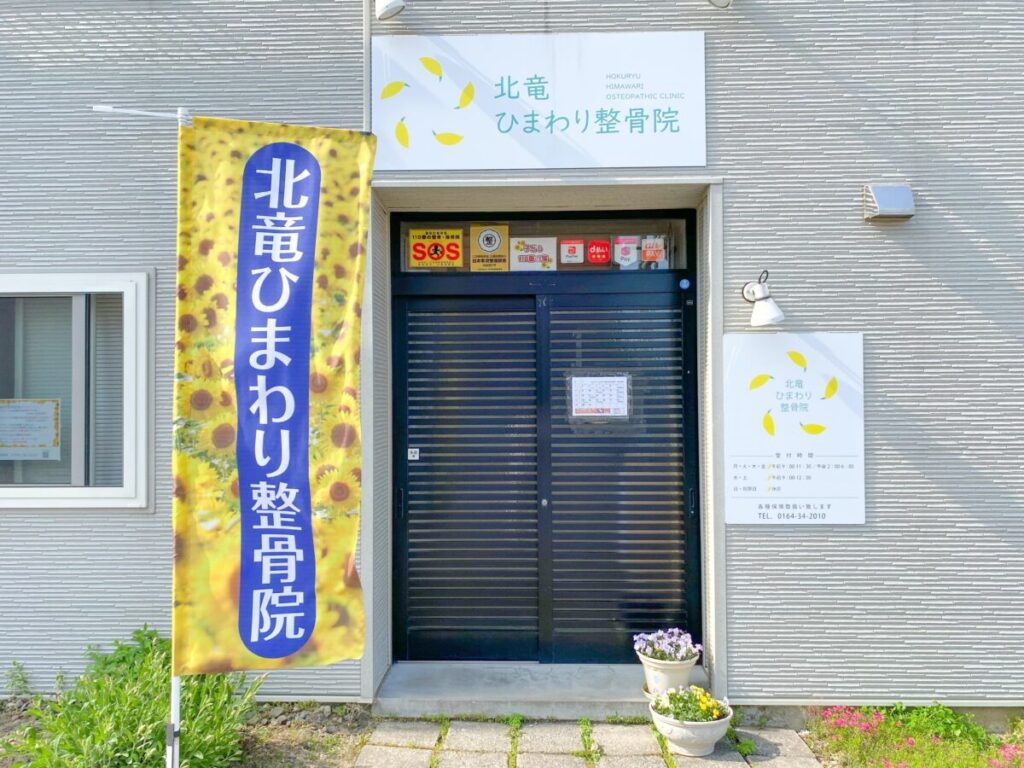
- 1 "Learn easy stretches you can do at home" by Dr. Hikaru Tanimoto, Director of Hokuryu Himawari Osteopathic Clinic
- 1.1 "Hokuryu Town Healthy Lecture" hosted by the Town Hall Residents' Division
- 1.2 Profile of Director Hikaru Tanimoto of Hokuryu Himawari Osteopathic Clinic
- 1.3 Today's Content
- 1.4 What is stretching?
- 1.5 The purpose of stretching
- 1.6 The benefits of stretching
- 1.7 Types of Stretching
- 1.8 Static stretching
- 1.9 Key points to remember when performing static stretching
- 1.10 Exercises to balance the body 1
- 1.11 Exercises to balance your body 2
- 1.12 Stretching in practice
- 1.13 Hamstring Stretch
- 1.14 Stretching to prevent stiff shoulders
- 1.15 Shoulder blade stretch
- 1.16 summary
- 2 YouTube videos
- 3 Other photos
- 4 Related articles and sites
"Learn easy stretches you can do at home" by Dr. Hikaru Tanimoto, Director of Hokuryu Himawari Osteopathic Clinic
The December course is an exercise class titled "Learn easy stretches you can do at home" taught by Dr. Hikaru Tanimoto, director of Kitaryu Himawari Osteopathic Clinic.
About 15 energetic townspeople participated in this course, where they listened to a theoretical talk on the purpose, effects, and types of stretching, and then practiced several types of stretching to slowly move their bodies.
"Hokuryu Town Healthy Lecture" hosted by the Town Hall Residents' Division
The "Healthy Course" is a course sponsored by the Care Prevention Section of the Hokuryu Town Hall's Resident Affairs Division, where participants learn about healthy lifestyle habits.

This year, the course will be held four times, and this is the second lecture following the "High Blood Pressure Talk" by Public Health Nurse Ohira in November.
Following this, a nutrition course entitled "To prevent high blood pressure - Learn how to reduce salt intake" will be held in January 2025 by nutritionist Eriko Sugiyama, followed by a nutrition course entitled "To prevent high blood pressure - Learn about balanced meals" by nutritionist Eriko Sugiyama in February.

Profile of Director Hikaru Tanimoto of Hokuryu Himawari Osteopathic Clinic

- March 1987 (Showa 62) Graduated from Shinryu Elementary School (Youth Baseball Club)
- March 1990 (Heisei 2) Graduated from Hokuryu Junior High School (Baseball Club)
- March 1993: Graduated from Fukagawa Nishi High School (long-distance track and field club)
- March 1995: Graduated from Sapporo Social Sports College (now Hokkaido Sports College)
- April 1995 (Heisei 7) Worked at Yoshida Gakuen Educational Corporation (until March 2013)
- June 1996 (Heisei 8) Completed the Lake Saroma 100km Ultra Marathon
- October 2002: Certified athletic trainer by the Japan Sport Association
- March 2009 (Heisei 21) Graduated from Hokkaido Judo Therapy College and obtained a license as a Judo Therapist.
- May 2013 (Heisei 25) Hokuryu Himawari Osteopathic Clinic opened
- My hobby is marathon running, and I have completed 50 full marathons (including 29 Hokkaido marathons) with a 100% completion rate.

Today's Content
- What is stretching?
- The purpose of stretching
- The benefits of stretching
- Types of Stretching
- Implementation points
- Stretching
- Check your muscle flexibility!
(1) Front of thigh
(2) Groin
(3) Back of thigh - Stretching to prevent stiff shoulders
- summary
When Professor Tanimoto asked, "Who stretches every day?" several people raised their hands! "Wow! That's impressive!" answered the question. "Who stretches 2-3 times a week?" and most people raised their hands!
"Stretching every day will help you stay healthy. Recently, more and more people are incorporating stretching into their daily lives as a way to stay healthy," began Dr. Tanimoto.
What is stretching?
There are many different types and purposes, but their essence is to increase the range of motion of joints by stretching the soft tissues involved in joint movement ⇒ improving flexibility
- Soft tissue is a general term for connective tissues such as tendons, ligaments, fascia, skin, and adipose tissue, excluding bone tissue, as well as blood vessels, striated muscles, smooth muscles, and peripheral nerve tissue (ganglia and nerve fibers).
- Stretching is the process of expanding the range of motion of the joints by stretching the tissues that cover these bones, which makes the joints of the body more flexible.
The purpose of stretching
- Get in shape
- Rehabilitation (after an injury)
- Injury prevention
The benefits of stretching
- Muscle tension relief (relaxing stiff muscles, relieving muscle tension)
- Increase joint range of motion
- Improves blood flow and removes fatigue-causing substances
Fatigue substances are substances that interfere with the body, such as lactic acid in the blood. When these substances accumulate in the body, muscles become stiff, putting pressure on blood vessels and nerves, causing discomfort such as stiff shoulders, pain, and headaches. This is evidence that blood flow is poor and fatigue substances are accumulating. Stretching can improve blood flow and improve physical balance.
Types of Stretching
- Static stretching: Most commonly performed stretches are static stretches.
- Manual resistance stretching: stretching with manual resistance (used for athletes and rehabilitation)
- Ballistic stretching: A type of stretching that baseball and soccer players do together before a game

- Static stretching is a safe and easy stretch.
- Manual stretching can produce quick results, but it also carries the risk of injury.
- Ballistic stretching is a good technique to perform before sports, but it also carries the risk of injury (also known as Brazilian exercises).
Today we will be doing some safe static stretching!

Static stretching
- Slowly stretch the muscle without any bounce or momentum, and maintain the stretched position.
- Hold the position for about 20 to 30 seconds (research has shown that doing it for more than 30 seconds on one part of the body reduces the effectiveness).
- Less likely to cause muscle pain
- It is the safest stretch
- The method is simple
- Can be performed by one person
Key points to remember when performing static stretching
◎ Important: Increases effectiveness
- Breathing technique: Don't hold your breath
- How to stretch: Stretch gradually without rebounding, to the point where it doesn't hurt (it should feel a bit painful).
- Awareness: Be aware of the muscle you are trying to stretch.
- Muscle temperature: It is more effective if you increase muscle temperature after bathing, etc.
- Stretching direction: Different muscles are stretched depending on the direction
- Don't try too hard
- The basic breathing technique is to inhale through the nose and exhale through the mouth, which relaxes the body.
- By relaxing, the parasympathetic nervous system (relaxation nerves) of the autonomic nervous system becomes dominant, making the body flexible and making it easier for the muscles to stretch. If the sympathetic nervous system (nerves that cause tension) is dominant, the body tends to become stiff.
- The most important thing is to focus on your muscles and stretch them!!!
- By focusing on the muscles, the degree of stretching and blood flow can be easily changed, resulting in improved effectiveness.
- It's important to be aware of things like, "I'm stretching these muscles," "This feels good," and "My shoulder muscles are stretching."
- Stretching is more effective when your body is warm
- Make stretching a habit after bathing
- Muscles are made up of many different types of muscles connected to one part of the body (for example, thighs or calves). Since they gather and connect from different directions, by slightly shifting the direction of stretching, it is possible to stretch different muscles evenly.
Exercises to balance the body 1
- Conducted in pairs
- Stretching with an imbalanced posture can put strain on the joints and prevent you from achieving the intended effect, so it is important to do warm-up exercises to ensure you stretch in a balanced position.

- Lie on your back (facing upwards) with your legs stretched out shoulder-width apart
- Move the pelvis up and down
- Keeping the pelvis that is easier to lower down, point your toes toward yourself and press your heel into the floor.
- Inhale through your nose and hold your breath for 3 seconds
- Breathe out through your mouth and relax your whole body.
- Take three deep breaths
- Repeat steps 3 to 6 once more
- After finishing, move your pelvis up and down again to check for any changes.
Exercises to balance your body 2
- Lie on your back (facing up) and raise both knees
- With both legs together, move them left and right to see which side is easier to knock down.
- Press the leg that was easier to lean against the cushion and lift the pelvis on the other side slightly.
- Inhale through your nose and hold your breath for 3 seconds
- Breathe in quickly through your mouth, return your legs to their original position, and relax your whole body.
- Take three deep breaths (in through your nose and out through your mouth)
- Repeat steps 3 to 6 again
- After finishing, bend both legs to the left and right again to check the changes.


Stretching in practice
- Static stretching: A common method of stretching muscles slowly without any movement.
- Start after bathing or lightly moving your body (after about 10 minutes of warm-up).
- Stretch in a relaxed position for the first 10 seconds
- After that, stretch a little more and hold it at a comfortable position (a comfortable painful position) for 10 seconds.
- Breathe naturally and be careful not to hold your breath (it's easy to relax, especially when you're exhaling).
- Make the stretcher aware of the area being stretched (the muscle being stretched)
- You can increase the stretching effect by changing the direction of stretching.
- Check your muscle flexibility!
(1) Front of thigh 1: Bend your knee and measure the distance between your heel and buttocks
・Front of thigh 1 (quadriceps and iliopsoas): Sit with one knee bent and lean your upper body back as far as possible without straining it. Be careful not to lift your knee.
・Front of thigh 2 (quadriceps and iliopsoas muscles)
- Standing position, hold the ankle so that one knee is bent
* The rectus femoris is the only biarticular muscle among the quadriceps, and can be effectively performed by adding the movement of pulling the hip joint backward (extension).
(2) Groin: Hold your knee and measure the distance between the back of your other knee and the floor.
Groin (iliopsoas, quadriceps): Spread your feet wide apart and stretch the front of your back thigh. Point your toes and avoid touching your knees to the floor (you can place the tops of your feet and knees on the floor).
Hamstring Stretch
- Hold the back of your knees firmly with both hands
- Extend your knees while gently bending your ankles


Stretching to prevent stiff shoulders
- Gently stretch your neck muscles
- Move your shoulder blades slowly and widely: Slow movements can warm up the fascia.


Shoulder blade stretch
- Place your hands on your shoulders, bring your elbows together in front of you, then lift your arms up and rotate your shoulders.

summary

- Stretch every day without straining yourself: Make it a part of your routine to do it after your bath!
- When stretching, be aware of which muscles you are stretching!
- By doing this regularly, you can prevent back pain and stiff shoulders!
- It's also a good idea to do exercises every day to keep your body in balance!
Professor Tanimoto carefully explained stretching theory in an easy-to-understand manner. We also learned warm-up exercises to improve body balance and several types of stretching techniques, making this a very meaningful, enjoyable, and healthy course.
With boundless love, gratitude, and prayers, I would like to thank Hokuryu Himawari Osteopathic Clinic Director Hikaru Tanimoto for his health course, "Healthy Stretching," which focuses on each and every muscle in the body and helps people develop the habit of moving their bodies slowly every day.
YouTube videos
Other photos

Related articles and sites


◇ Interview and text: Ikuko Terauchi (Photography and editing assistance: Noboru Terauchi)
![JC Chairman Kuriyama visits the town office [Hokuryu Town website]](https://portal.hokuryu.info/wp/wp-content/uploads/2024/12/2024-12-23-20.50.54-375x274.jpg)